Alaska HOA Flag Display Rules: Federal Protection and Association Limits
Alaska lacks a state statute governing HOA flag display rules, but federal law under the Freedom to Display the American Flag Act protects your right to fly the U.S. flag. Your association's covenants control other flags, and understanding these boundaries prevents disputes.
Alaska HOA Flag Display Rules: Federal Protection and Association Limits
Alaska has no state statute that regulates homeowner association flag display policies. Your rights and restrictions flow from federal law and your association's governing documents. The absence of state legislation means Alaska HOAs have wide latitude to regulate flags other than the U.S. flag, but federal protection for the American flag remains absolute.
Federal Law Protects the U.S. Flag
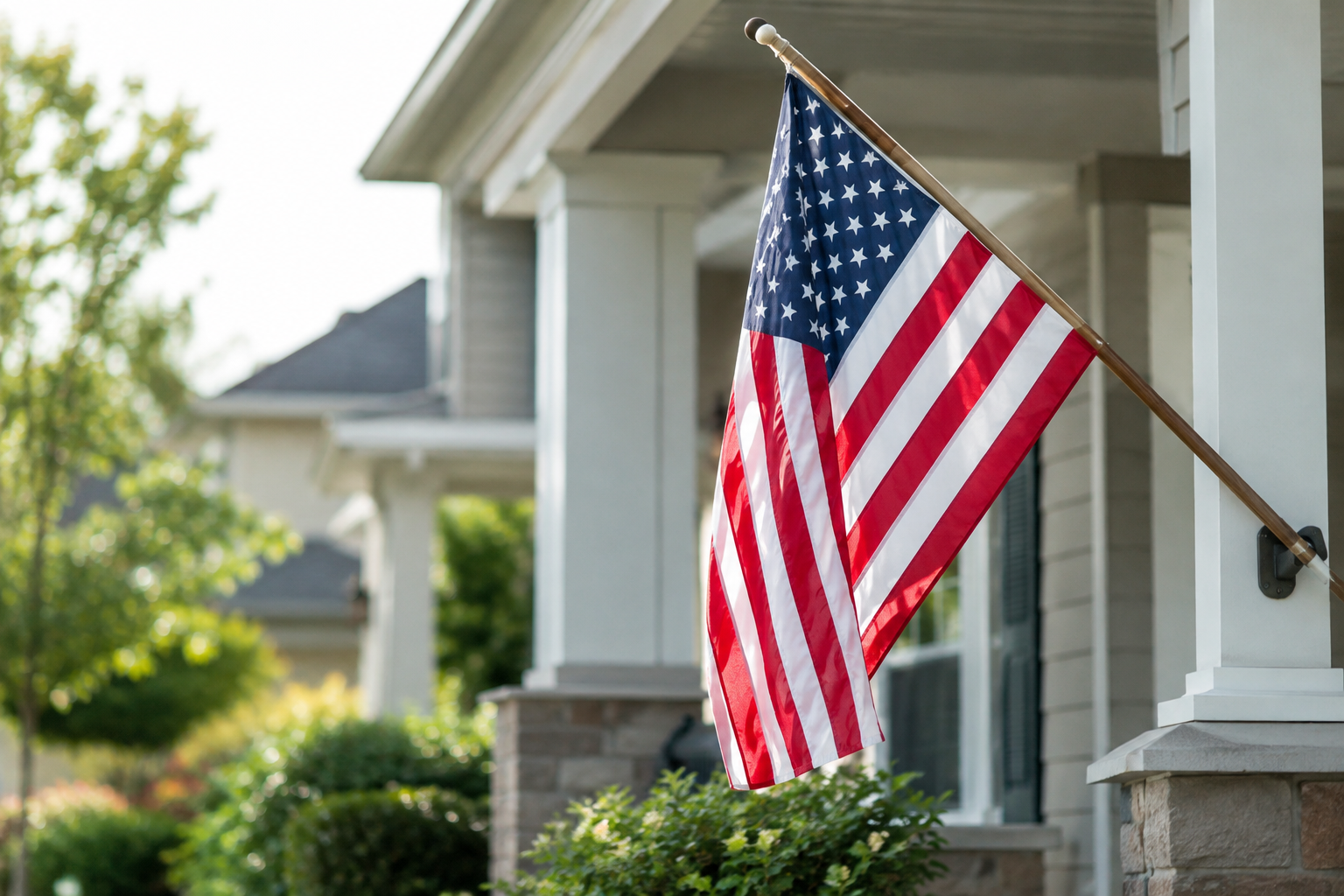
The Freedom to Display the American Flag Act of 2005, codified at 4 U.S.C. § 5 Note, prohibits any HOA from restricting a member's right to display the United States flag on property the member owns or has exclusive use of. This federal law overrides any covenant, bylaw, or rule your association adopted. Your board cannot ban the American flag, limit its size to something smaller than 3 feet by 5 feet, or require written approval before you hang it.
The Act allows your association to impose reasonable time, place, and manner restrictions. A common example is requiring that flags comply with the U.S. Flag Code, prohibiting display during severe weather, or mandating that flagpoles not exceed a certain height for safety. Your board can enforce rules about flag condition, such as requiring removal of tattered flags, as long as the restriction does not effectively prevent display.
Alaska's lack of additional state protections means your board has no obligation to allow state flags, military flags, sports team flags, or political flags unless your covenants explicitly permit them. Many Alaska associations drafted declarations in the 1980s and 1990s that contain broad aesthetic control language, and those provisions remain enforceable today.
Alaska Court Authority and Dispute Resolution
Disputes over flag display in Alaska fall under the jurisdiction of the Alaska Superior Court. Because the state has no flag display statute, courts interpret covenant language strictly. If your declaration states that no flags other than the U.S. flag may be displayed, the court will enforce that prohibition.
The Alaska Attorney General's office does not regulate HOA flag policies. The Alaska Real Estate Commission oversees common interest communities under Alaska Stat. § 34.08, but that chapter addresses disclosure, creation, and management of condominiums, not flag display. When a member challenges a flag restriction, the legal question turns on whether the restriction is reasonable and applied uniformly.
A recent example from Anchorage illustrates the stakes. In 2023, the Eagle River Highlands Homeowners Association imposed a fine on a homeowner who displayed a 6 foot by 10 foot Alaska state flag on a 25 foot flagpole in his front yard. The member argued that Alaska's status as a state with strong flag pride should create an exception. The association's covenants prohibited any flag other than the U.S. flag without architectural committee approval. The Superior Court upheld the fine, ruling that the covenant language was unambiguous and the restriction was reasonable. The homeowner paid $1,200 in fines and legal fees before removing the oversized state flag.
What Your Association Can Regulate
Your board may regulate flags other than the U.S. flag if your governing documents grant that authority. Review your declaration and architectural guidelines. Common restrictions include total bans on political flags, seasonal flags, or decorative banners. Some Alaska associations permit one additional flag, such as a military service flag or POW/MIA flag, if the member obtains written approval.
Your board can also regulate the method of display. Rules about flagpole height, mounting hardware, and placement relative to the property line are enforceable as long as they apply to all members equally. If your covenants require that all exterior modifications receive architectural committee approval, your board can require flag display applications, but the board cannot deny an application for a U.S. flag that meets the federal size and condition standards.
Alaska's climate creates unique enforcement issues. High winds, snow load, and extended darkness in winter mean flagpoles and fabric degrade faster than in warmer states. Your board can adopt rules requiring regular maintenance and replacement of damaged flags. A policy that mandates removal of flags with visible tears or fading is a reasonable time, place, and manner restriction under federal law.
Amending Your Governing Documents
If your current declaration is silent on flag display, your board can propose an amendment to clarify what is allowed. The amendment process in Alaska requires a vote of the membership. Review your bylaws to determine the approval threshold, which is typically 67 percent or 75 percent of all members. A well drafted flag display amendment should list the types of flags permitted, specify size limits, define acceptable display methods, and describe the approval process for flags not explicitly allowed.
When drafting the amendment, include language that acknowledges federal protection for the U.S. flag and references 4 U.S.C. § 5 Note. This prevents confusion and reduces the risk that a member will challenge the amendment as an attempt to ban the American flag. Consult your attorney for your specific situation to ensure the amendment complies with Alaska recording requirements and does not conflict with other sections of your declaration.
Enforcement Best Practices
Your board should enforce flag rules consistently. If you allow one member to fly a college team flag without architectural approval, you create a precedent that other members will cite. Document every request, every approval, and every denial. Take photographs of any flag that violates your covenants and include the photo in your violation notice.
When a member displays a prohibited flag, send a written notice that cites the specific covenant section and explains the cure period. A typical cure period in Alaska is 14 to 30 days. If the member does not remove the flag, your board can impose a fine according to your fine schedule. Escalating fines are common, starting at $50 for the first violation and increasing by $50 for each subsequent month.
Your board cannot enter a member's property to remove a flag. If a member refuses to comply after exhausting your internal process, your only remedy is to file a lawsuit in Superior Court seeking an injunction and damages. This process is expensive and time consuming, so your board should consider mediation before litigation.
What You Should Do Now
Review your association's declaration, bylaws, and architectural guidelines. Identify the sections that address flags, exterior decorations, or architectural modifications. If your documents are silent, place a flag policy on your board's agenda for discussion at the next meeting. Draft a proposed rule or amendment that specifies which flags are allowed and which require approval.
Communicate your flag policy to members in writing. Include a summary of federal law, a list of permitted flags, and the approval process for flags not explicitly allowed. Update your member handbook and post the policy on your association's website. When a new member moves in, provide a copy of the flag policy during the welcome process.
Manorway's AI assisted platform helps you track flag display applications, store architectural committee decisions, and maintain a record of violations. You can upload photos of prohibited flags, document the timeline of notices and fines, and generate reports that show consistent enforcement. When your board uses a centralized system to manage flag policy, you reduce the risk of selective enforcement claims and create a clear audit trail for disputes.
Ready to modernize your HOA management?
Learn how Manorway can help your community operate more efficiently.
Get Started Today