Colorado HOA Foreclosure Law: Common Mistakes Boards Make When Collecting Unpaid Dues
Colorado law grants HOAs the power to foreclose on properties with unpaid assessments, but boards routinely make errors in notice timing, lien priority calculations, and judicial procedure that cost thousands in legal fees and delay collection.
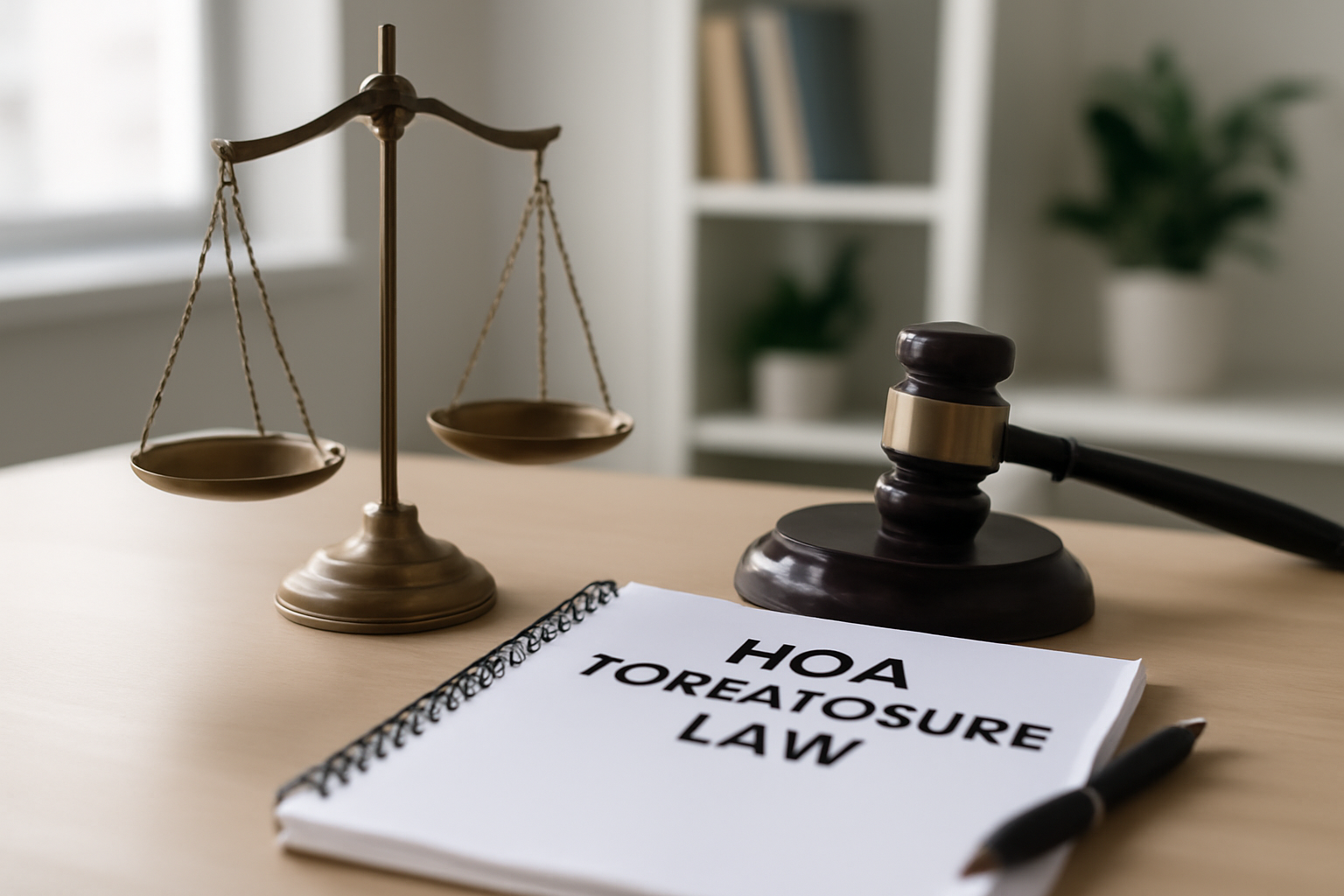
Colorado HOA Foreclosure Law: Common Mistakes Boards Make When Collecting Unpaid Dues
Colorado does not have a single statute titled "HOA Foreclosure Law." Instead, your association's foreclosure authority flows from the Colorado Common Interest Ownership Act and the Colorado Revised Statutes governing liens and judicial foreclosure procedure. The Colorado Court of Appeals and district courts have clarified key elements of HOA collection powers through case law, and boards that misunderstand these rulings make expensive mistakes that delay collection and expose the association to counterclaims.
Your board has the statutory right to place a lien on a unit or lot when an owner falls behind on assessments. You can enforce that lien through judicial foreclosure. However, Colorado requires strict compliance with notice requirements, procedural steps, and priority rules. A single misstep in your collection process can render your lien unenforceable or subordinate your claim to other creditors.
Mistake One: Failing to Send Pre Lien Notice With the Correct Timing
Colorado law requires your association to provide written notice to the delinquent owner before recording a lien. This notice must state the amount owed, the right to request a payment plan, and the deadline by which the owner can cure the delinquency. Many boards send a generic collection letter and assume it satisfies the notice requirement. It does not.
The notice must be sent by certified mail, return receipt requested, or by hand delivery. Your board must allow at least 10 calendar days from the date of mailing for the owner to respond before recording the lien. If you mail the notice on May 1, you cannot record the lien before May 12. Boards routinely count business days instead of calendar days, or they record the lien the same week the notice is mailed. Either error voids the lien.
A second common error is sending notice to the property address only. If the owner has provided the association with a separate mailing address for notices, you must send the pre lien notice to that address as well. Failing to do so gives the owner a defense in any foreclosure action.
Mistake Two: Misunderstanding Colorado's Lien Priority Rule
Colorado is not a "super lien" state in the way Nevada was before recent reforms. Your HOA lien does not automatically take priority over a first mortgage. Instead, Colorado law gives your association a lien for up to six months of unpaid assessments that accrued before the mortgage holder forecloses or acquires title. This six month priority applies only to assessments, not to interest, late fees, or attorney fees.
Boards make two critical errors here. First, they assume the entire unpaid balance takes priority over the mortgage. It does not. If an owner owes 24 months of assessments totaling 12,000 dollars and the mortgage lender forecloses, your association has priority for only the last six months of assessments, roughly 3,000 dollars. The remaining 9,000 dollars is subordinate to the mortgage and may be wiped out by the foreclosure sale.
Second, boards fail to calculate the six month period correctly. The six months run backward from the date the mortgage lender completes its foreclosure, not from the date you record your lien. You must track the mortgage foreclosure timeline and adjust your collection strategy accordingly.
A real example: Highlands Ranch is home to more than 100,000 residents across multiple HOAs and metro districts. In 2019, one association in Highlands Ranch recorded a lien for 18,000 dollars in unpaid dues and began foreclosure proceedings. The owner's mortgage lender simultaneously initiated its own foreclosure. The HOA completed its judicial foreclosure first and purchased the property at the sale for 20,000 dollars. However, the mortgage lender's lien survived because the HOA's lien was subordinate beyond the six month priority. The association ended up negotiating a payoff with the lender, paying more than 150,000 dollars to clear the mortgage. The association lost money on the transaction because the board did not understand lien priority.
Mistake Three: Using Non Judicial Foreclosure Without Authority
Colorado requires judicial foreclosure for HOA liens unless your declaration of covenants explicitly grants the association a power of sale. Most Colorado declarations do not include power of sale language. Boards that attempt to foreclose through a trustee sale or non judicial process without clear authority in the governing documents expose the association to liability.
Judicial foreclosure means your association must file a lawsuit in district court, serve the owner and any lienholders, prove the debt and the validity of the lien, and obtain a court order authorizing the sale. This process takes a minimum of four to six months and costs between 5,000 and 15,000 dollars in attorney fees and court costs. Boards resist judicial foreclosure because of the time and expense, but there is no shortcut.
A common mistake is to hire a law firm that promises a fast track non judicial process. If your declaration does not contain power of sale language, that process is void. The owner can challenge the foreclosure sale, and the court will set it aside. Your association will then owe the owner damages for wrongful foreclosure and will have to start over with a judicial action.
Mistake Four: Ignoring the Owner's Right to Redeem
Colorado law grants homeowners the right to redeem the property after a judicial foreclosure sale. The redemption period is typically 75 days from the date of sale, but it can be longer if the property is agricultural or if the owner is a member of the military. During the redemption period, the owner can pay the full foreclosure sale price plus interest, costs, and fees, and reclaim the property.
Boards make two errors during redemption. First, they assume the redemption period starts when the court enters the foreclosure decree. It does not. The period starts when the sale is confirmed and the deed is issued. If you schedule the sale for June 1 but the court does not confirm it until June 15, the redemption period runs from June 15.
Second, boards begin making plans for the property immediately after the sale, including contracting for repairs, advertising for tenants, or negotiating a resale. If the owner redeems, the association must reverse all of those transactions and return the property in the condition it was in at the time of sale. Any improvements the association makes become the owner's property without compensation.
The safer approach is to wait until the redemption period expires before taking any action with the property. This means you will hold the property without income for at least 75 days, and you must budget for property taxes, insurance, and maintenance during that window.
Mistake Five: Failing to Account for Bankruptcy
When an owner files for bankruptcy, the automatic stay under federal bankruptcy law halts your foreclosure action immediately. You cannot record a lien, file a lawsuit, conduct a sale, or take any collection action without first obtaining relief from the bankruptcy court. Boards that ignore the stay and continue with foreclosure face sanctions, damages, and dismissal of the foreclosure case.
A frequent mistake is assuming that a Chapter 7 bankruptcy wipes out HOA assessments. It does not. Chapter 7 discharges the owner's personal liability for pre petition assessments, but it does not eliminate the lien against the property. You can still foreclose on the lien after the bankruptcy case closes, but you cannot pursue the owner personally for the debt.
In a Chapter 13 bankruptcy, the owner proposes a repayment plan that may include HOA assessments. Your association must file a proof of claim to preserve your right to payment under the plan. If you miss the claims deadline, you forfeit your claim for pre petition assessments. The deadline is typically 70 days after the bankruptcy petition is filed, but it can vary by court. Monitor the bankruptcy docket and file your claim on time.
Mistake Six: Recording a Lien Without a Valid Board Resolution
Colorado law requires your board to adopt a resolution authorizing the lien before you record it. The resolution must state the amount owed, the legal description of the property, the authority under the governing documents, and the board's decision to record the lien. Many boards skip this step or adopt a vague resolution that does not contain the required details.
If an owner challenges your lien and you cannot produce a valid board resolution, the court may invalidate the lien. You will then have to cure the defect, re record the lien, and restart the foreclosure timeline. This delay gives the owner additional time to sell the property, file bankruptcy, or accumulate more debt.
The resolution must be adopted at a properly noticed board meeting. If your bylaws require a quorum of directors to take action, you must have that quorum present when you vote on the lien resolution. A resolution adopted by email or by fewer than a quorum is not valid.
Mistake Seven: Misapplying Payments and Violating the Colorado Consumer Protection Act
Colorado courts have held that HOA collection practices must comply with the Colorado Consumer Protection Act when the association's conduct involves unfair or deceptive trade practices. Misapplying payments is one area where boards run into trouble.
If an owner makes a partial payment and does not specify how to apply it, your association must apply the payment in the manner that is least harmful to the owner. This typically means applying the payment to the oldest outstanding assessment first, then to interest, then to late fees, and finally to attorney fees. Boards that reverse this order and apply payments to attorney fees first, leaving assessments unpaid, expose the association to a claim under the consumer protection statute.
A second error is failing to provide an accurate accounting when the owner requests it. Colorado law requires your association to provide a statement of the account within a reasonable time after the owner requests it. If you delay or provide an incomplete statement, the owner can use that delay as a defense in the foreclosure case.
What the Colorado Court System and Regulators Say
Colorado district courts have jurisdiction over HOA foreclosure cases. The Colorado Court of Appeals reviews disputes about lien priority, notice requirements, and procedural compliance. There is no single state agency that regulates HOA foreclosures, but the Colorado Attorney General's office has authority to investigate consumer protection complaints related to HOA collection practices.
The Colorado Division of Real Estate oversees community association managers, but it does not have direct authority over foreclosure decisions. If your board hires a management company to handle collections, the manager must comply with licensing requirements and fiduciary standards, but the ultimate responsibility for foreclosure decisions rests with the board.
What You Should Do Now
Review your association's declaration and bylaws to confirm whether you have power of sale authority. If you do not, accept that you will need to use judicial foreclosure for any lien enforcement. Create a written policy that documents your pre lien notice process, including the required language, the mailing method, the cure period, and the addresses to which you will send notice. Train your board and management company on the six month priority rule and the mechanics of lien calculation.
Establish a relationship with an attorney who has experience in Colorado HOA foreclosure law. Do not wait until you have a delinquent owner to find counsel. Interview attorneys now, compare fee structures, and select someone who can guide you through the judicial process. Budget for foreclosure costs in your annual operating budget. A single foreclosure can cost 10,000 dollars or more, and you may not recover all of that from the sale proceeds.
Monitor bankruptcy filings in your community. Use the federal court's PACER system to track cases that involve your members. File proofs of claim on time and seek relief from the automatic stay when appropriate. Document every step of your collection process. Keep copies of notices, certified mail receipts, board resolutions, payment records, and court filings in a central file. Consult your attorney for your specific situation before recording any lien or initiating foreclosure.
Manorway helps boards manage the foreclosure timeline, track notice deadlines, store board resolutions, and maintain payment records in one platform. When your board uses an AI assisted system to document each step, you reduce the risk of procedural errors and create a complete record that supports your case in court. Manorway does not replace your attorney, but it ensures you have the documentation your attorney needs to move your foreclosure forward without delays.
The Bottom Line for Colorado Boards
Colorado HOA foreclosure law is unforgiving. A missed notice deadline, an incorrect lien priority calculation, or a procedural error can add months to your collection timeline and thousands of dollars to your legal costs. The six month priority rule means your association will not recover the full unpaid balance in many cases, and the judicial foreclosure requirement means you cannot take shortcuts. The boards that succeed in Colorado are the ones that follow a disciplined process, document every step, and engage experienced counsel early. The boards that fail are the ones that assume foreclosure is simple or that try to cut costs by skipping steps. Your fiduciary duty requires you to collect assessments, but it also requires you to do so lawfully. A wrongful foreclosure exposes your association to damages and undermines member confidence in the board.
Ready to modernize your HOA management?
Learn how Manorway can help your community operate more efficiently.
Get Started Today