Maintenance
HVAC System Replacement: Planning for HOA's Largest Capital Expense
Your board just received three bids for replacing the aging boilers in Building C. The lowest quote? $287,000. The highest? $412,000. And that's just one building out of seven in your community. Wh...
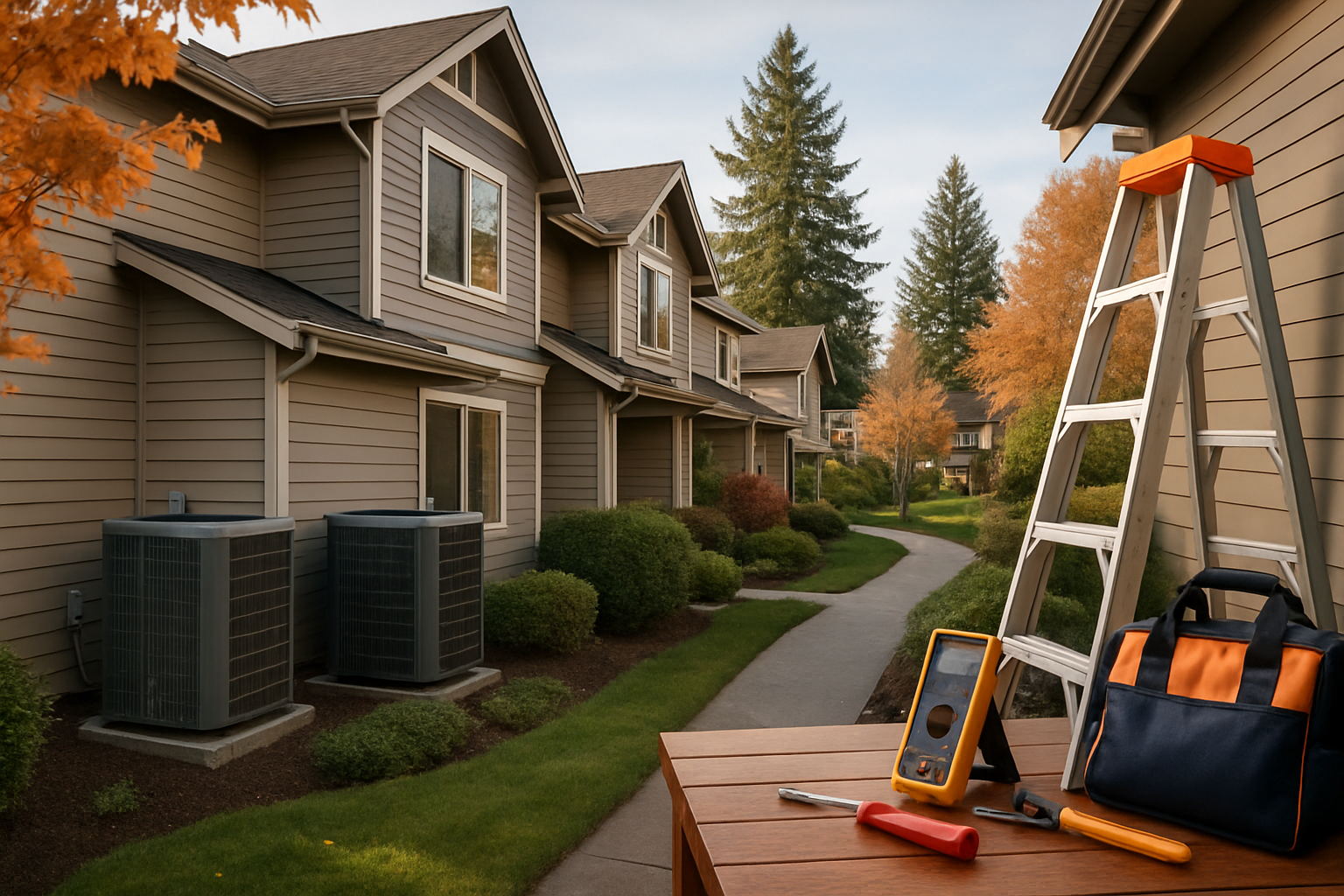
HVAC System Replacement: Planning for HOA's Largest Capital Expense Your board just received three bids for replacing the aging boilers in Building C. The lowest quote? $287,000. The highest? $412,000. And that's just one building out of seven in your community. When you multiply that across your entire property, you're looking at the single largest capital expense most HOAs will ever face. and one that can't wait when systems fail in January. HOA HVAC replacement isn't just about swapping old equipment for new. It's about understanding system lifecycles, evaluating newer technologies against proven reliability, and structuring financing that doesn't devastate your reserves or trigger a special assessment that makes homeowners revolt at the next annual meeting. ## Understanding the True Lifecycle of Mechanical Systems Most reserve studies assign a 20-year useful life to heating and air conditioning equipment. In practice, Puget Sound communities often see variance between 15 and 25 years depending on maintenance quality, system type, and usage patterns. Gas-fired boilers serving hydronic heating systems typically last longer than rooftop package units that provide both heating and cooling. But age alone doesn't tell the whole story. A 17-year-old boiler with documented annual maintenance and clean combustion readings might have five good years left. A 14-year-old system that's been neglected might fail next winter. Track these indicators that replacement is approaching: rising repair costs (when you're spending more than 15% of replacement value annually), declining efficiency (utility costs climbing faster than rate increases), difficulty sourcing parts, and refrigerant phase-outs for older AC systems. For communities in King County and Snohomish County where natural gas serves most buildings, pay attention to local energy codes. The 2024 Washington State Energy Code (which governs construction and major renovations as of 2026) has specific efficiency requirements for replacement mechanical systems. Your engineer needs to design for current code, not what was acceptable when your buildings were constructed. ## Evaluating Energy-Efficient Alternatives Without Getting Sold Heat pump technology has advanced significantly. But when a mechanical contractor tells you that air-source heat pumps will "cut your heating costs in half," ask for building-specific modeling, not marketing claims. Heat pumps work. They're particularly effective in our moderate climate. But the economics depend on your current fuel source, electricity rates (which vary by utility provider across the Puget Sound), building insulation quality, and whether you're replacing forced-air systems or converting from hydronic heat. For multi-building communities, hybrid approaches often make more sense than all-or-nothing conversions. You might install high-efficiency condensing boilers in buildings with existing hydronic systems while specifying heat pumps for buildings that already have ducted systems. Variable refrigerant flow (VRF) systems offer another option for buildings with mixed heating and cooling needs. These systems cost more upfront but provide zone-level control that appeals to homeowners and can reduce operating costs. The tradeoff: more complexity means specialized service requirements. Whatever technology you're considering, get an engineering analysis. not just contractor proposals. A mechanical engineer who isn't selling equipment will give you unbiased lifecycle cost comparisons. Expect to pay $3,500 to $8,000 for this analysis depending on community size. It's cheap insurance against a $500,000 decision. ## Phased Replacement: Strategy for Multi-Building Communities If you manage seven buildings with mechanical systems approaching end-of-life, you probably can't replace everything in one year without either depleting reserves dangerously or levying a special assessment. Phased replacement over 2-4 years spreads the financial impact while addressing the highest-risk systems first. But you need a defensible priority matrix, not just "we'll do the oldest first." Consider these factors: system condition assessments from your engineer, repair history (buildings where you've spent the most recently), parts availability (systems using R-22 refrigerant need priority), and resident impact (buildings with elderly residents or young families get higher priority for heating system replacement). Document your prioritization criteria in board minutes. When you tell homeowners in Building F that Building A gets new boilers first, you need a transparent explanation that doesn't sound arbitrary. Phased approaches also give you options. If the first building's replacement goes poorly. contractor problems, unexpected structural issues, or resident complaints. you can adjust specifications before tackling the remaining buildings. If it goes smoothly, you can potentially accelerate the schedule. One caution: don't stretch the replacement schedule so long that your "Phase 1" buildings need replacement again before you've finished Phase 3. A realistic phased plan typically spans 2-3 years maximum for buildings with similar system ages. ## Financing Mechanical System Replacements Three primary approaches: pay from reserves, take a loan, or levy a special assessment. Most boards end up combining at least two of these. Washington HOAs have statutory authority to borrow funds under RCW 64.38.025 (as of 2026), but loans require membership approval unless your governing documents specify otherwise. HOA-specific lenders offer loans up to $2 million with 5-10 year terms. Current rates (early 2026) range from 6.5% to 8.5% depending on community financials and loan term. Loans make sense when reserves can't cover the full cost but can handle monthly payments, and when delaying replacement risks mid-winter failures. They're less appealing when you're already carrying debt or monthly assessments are at the high end for your area. Special assessments remain unpopular but sometimes necessary. If you're assessing, be clear about the amount, payment terms, and what it covers. Communities that offer 12-24 month payment plans see better compliance than lump-sum requirements. And check your governing documents. some require membership votes for assessments above certain thresholds. The least visible option: increase regular assessments now to build reserves for replacements 2-3 years out. A $25 monthly increase per unit in a 100-unit community adds $30,000 annually to reserves. Over three years, that's $90,000 toward a major capital project without a special assessment. ## Engineering, Bidding, and Contractor Selection Don't bid HVAC replacement projects without engineered specifications. "Replace existing boilers with equivalent" leaves too much room for interpretation and makes comparing bids impossible. Your mechanical engineer should provide specifications detailed enough that contractors bid identical scope. This includes equipment models, efficiency ratings, required warranties, and installation requirements like seismic bracing and code-required upgrades. Get at least three bids. For projects over $200,000, consider five. But more bids don't always mean better. you want qualified mechanical contractors with HOA experience, proper licensing (Washington contractor license verification available through L&I), and references from similar communities. Check those references. Ask specifically about how the contractor handled occupied-building work, resident communication, and schedule adherence. HVAC replacement in occupied buildings is disruptive. Your contractor needs a proven process for minimizing impact. Budget 10-15% above the contracted amount for contingencies. When you open walls to replace steam risers, you'll sometimes find problems. Buildings constructed in the 1970s-1990s occasionally have asbestos pipe insulation requiring abatement. You'd rather have contingency funds you don't use than face mid-project funding gaps. --- Major mechanical system replacements test every aspect of board governance: long-term planning, financial management, vendor selection, and resident communication. Manorway's capital project tracking and document management keep engineering reports, bid comparisons, and contractor communications organized and audit-ready. particularly valuable when projects span multiple board terms. [See how it works](https://www.manorway.com).
Ready to modernize your HOA management?
Learn how Manorway can help your community operate more efficiently.
Get Started Today