Illinois HOA Drone and Surveillance Rules: What Privacy Law Allows
Illinois has no specific statute governing HOA drone use, but the state's strong privacy protections under common law and biometric data statutes create boundaries for boards regulating surveillance technology and aerial monitoring.
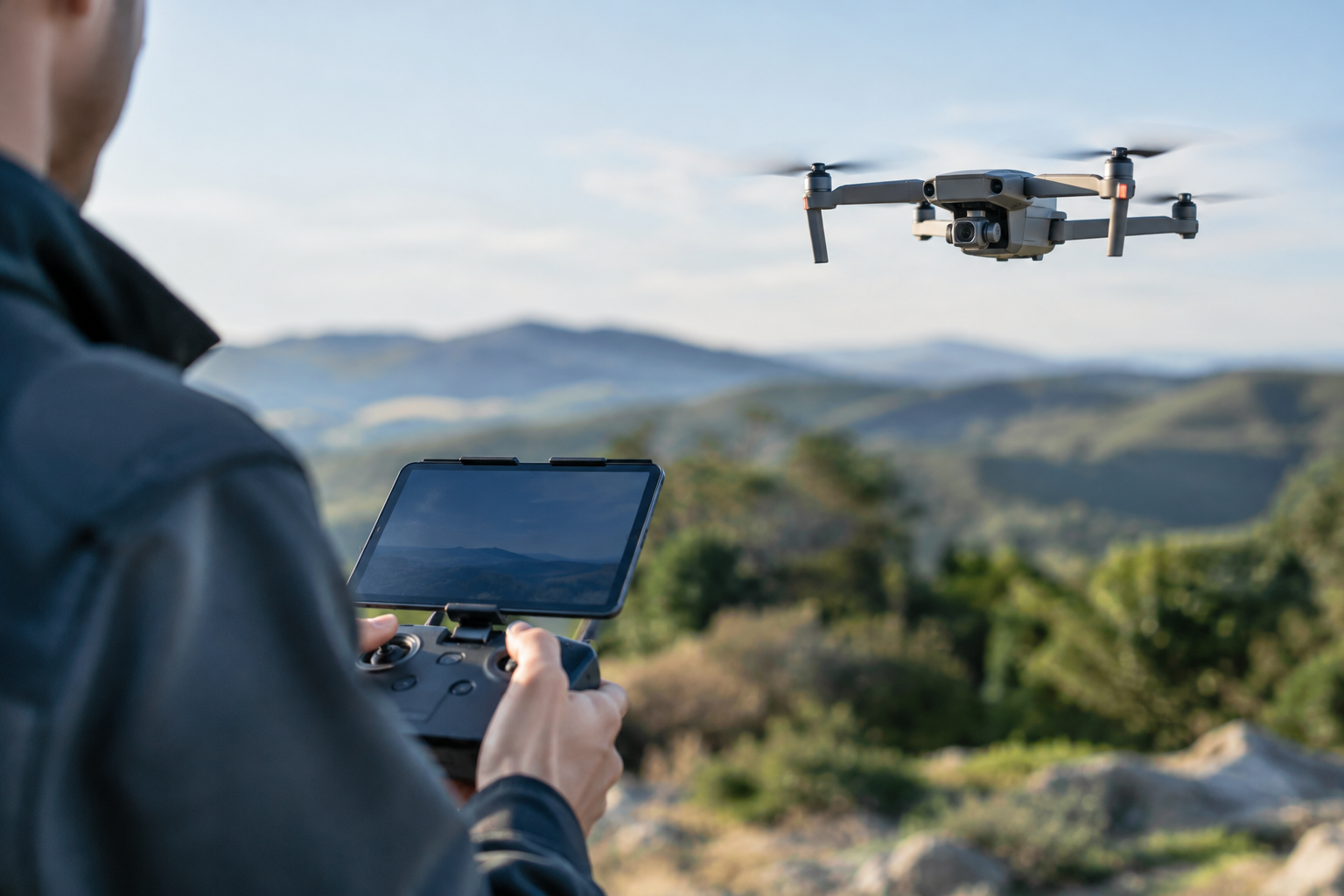
Illinois HOA Drone and Surveillance Rules: What Privacy Law Allows
Illinois has no state statute that explicitly regulates HOA authority over drone use or aerial surveillance within your community. Your association's power to restrict drones, cameras, and other monitoring technology flows from your governing documents and your board's authority to adopt reasonable rules under the Illinois Condominium Property Act and common interest community law. However, Illinois privacy law, including the Biometric Information Privacy Act and common law privacy torts, creates boundaries that your board must respect when you draft surveillance policies.
Because Illinois does not prescribe a single framework for HOA drone regulation, you must balance your association's legitimate interest in security and rule enforcement against individual privacy rights recognized by Illinois courts. The Illinois Attorney General's office has authority to investigate consumer protection complaints, and Illinois residents have a strong common law right to privacy that courts enforce through civil lawsuits.
What Illinois Privacy Law Protects
Illinois courts recognize four distinct privacy torts: intrusion upon seclusion, public disclosure of private facts, false light, and appropriation of name or likeness. The intrusion upon seclusion tort is most relevant to HOA drone and camera disputes. A person can sue if someone intentionally intrudes upon their solitude or private affairs in a manner that would be highly offensive to a reasonable person. Courts have applied this tort to surveillance that captures images inside a home or private yard.
The Illinois Biometric Information Privacy Act, 740 ILCS 14, regulates the collection and storage of biometric identifiers like fingerprints, retina scans, and facial geometry. If your association uses security cameras with facial recognition software, you must obtain written consent from each resident, provide a written policy describing retention and destruction timelines, and follow strict data security standards. The Act permits private lawsuits, and Illinois courts have awarded statutory damages of $1,000 to $5,000 per violation. A 2019 settlement involving a condominium building in Chicago's Loop district required the association to pay $150,000 to residents after the board installed facial recognition cameras in the lobby without obtaining consent.
What Your Governing Documents Allow
Your declaration of covenants and bylaws determine whether your board can restrict drone flights over common areas or private lots. Most Illinois HOA and condo declarations grant the board authority to adopt rules that promote safety, preserve property values, and prevent nuisances. If your declaration includes a broad rule making power, you can prohibit residents from launching drones from common areas, restrict drone flights below a certain altitude over the property, or ban the use of drones to capture images of other residents' private spaces.
Your rule must be reasonable, uniform, and consistent with the declaration. A blanket ban on all drone use by residents may be difficult to enforce if the drone operator launches from outside the property and flies over common areas without capturing private spaces. A narrower rule that prohibits hovering over private patios, capturing images through windows, or operating drones in a manner that creates noise or safety hazards is more defensible.
If your declaration is silent on drones, your board can still adopt a rule under the general authority to prevent nuisances and protect residents' quiet enjoyment. Document the specific harm you are addressing, such as noise complaints, privacy violations, or safety risks. A vague rule that simply states "no drones" without explanation invites a challenge.
Federal Aviation Administration Preemption
Federal law preempts state and local regulation of aircraft navigation, including drone flight paths in navigable airspace. The FAA Reauthorization Act of 2018 clarified that state and local governments may regulate drone operations for reasons of privacy, trespass, or nuisance, as long as the regulation does not conflict with FAA safety rules. Your association may restrict where residents launch drones, how low they fly over private property, and what they capture on camera, but you cannot ban flights through airspace above your property if the operator complies with FAA altitude and registration rules.
FAA rules require recreational drone operators to register drones weighing more than 0.55 pounds, fly below 400 feet, and avoid flying over people or moving vehicles. Your board can reference these federal standards in your drone policy and require residents who operate drones to provide proof of FAA registration and compliance.
Security Cameras on Common Property
Many Illinois HOAs and condos install security cameras in common areas like parking lots, entrances, and clubhouses. Illinois law permits camera surveillance in public or semi public spaces where residents have no reasonable expectation of privacy. However, your board must avoid capturing images inside private units or yards. Position cameras to record only common areas, post signs notifying residents that surveillance is in use, and adopt a written policy describing how long you retain footage and who may access it.
If your cameras use facial recognition or other biometric technology, you must comply with the Biometric Information Privacy Act. Obtain written consent from each resident, provide a retention schedule, and ensure that your data storage vendor follows Illinois data security standards. Failure to comply can result in statutory damages that exceed the cost of the camera system.
Drones for Association Inspections
Some Illinois HOAs use drones to inspect roofs, chimneys, or other hard to reach areas. If your board hires a vendor to conduct drone inspections, confirm that the operator holds an FAA Remote Pilot Certificate and carries liability insurance. Notify residents in advance of the inspection date and explain the purpose of the flight. Avoid capturing images of private spaces like backyards or patio areas unless you obtain written consent from the affected unit owner.
A 2022 inspection dispute in a Naperville townhome association illustrates the risk. The board hired a contractor to inspect roofs using a drone, but the contractor also captured images of several backyards and posted them in a shared inspection report. Three unit owners filed complaints with the board, claiming the images violated their privacy. The board ultimately paid $12,000 to settle the claims and revised the inspection contract to prohibit capturing images of private spaces.
What You Should Do Now
Review your declaration and bylaws to determine whether your board has explicit authority to regulate drones and surveillance devices. If your documents are silent, confirm that your general rule making power is broad enough to cover new technology. Draft a written drone and surveillance policy that describes prohibited conduct, explains the privacy interests you are protecting, and references federal FAA rules. Circulate the draft to residents for comment before the board votes to adopt it.
If your association uses security cameras, audit your current system to confirm that cameras capture only common areas and that you have posted notice of surveillance. If you use facial recognition or other biometric technology, obtain written consent from each resident and adopt a written policy that complies with the Biometric Information Privacy Act. Consult your attorney for your specific situation to ensure that your policy balances security needs against Illinois privacy protections.
Manorway's AI assisted platform helps you draft surveillance policies, track resident consent, and maintain a record of board votes and rule amendments. When your board documents the rationale behind each restriction and stores policies in a centralized system, you create a defensible record that protects the association in disputes. Manorway can generate a compliance checklist for your drone and camera rules, schedule policy reviews, and send automated notices to residents when you adopt new technology standards.
Ready to modernize your HOA management?
Learn how Manorway can help your community operate more efficiently.
Get Started Today