Michigan HOA Solar Panel and Clothesline Rules: What Boards Need to Know
Michigan lacks a state law requiring HOAs to permit solar panels or outdoor clotheslines. Your association's authority to restrict or allow these devices flows entirely from your governing documents, but boards must balance restrictions with member interests and evolving energy priorities.
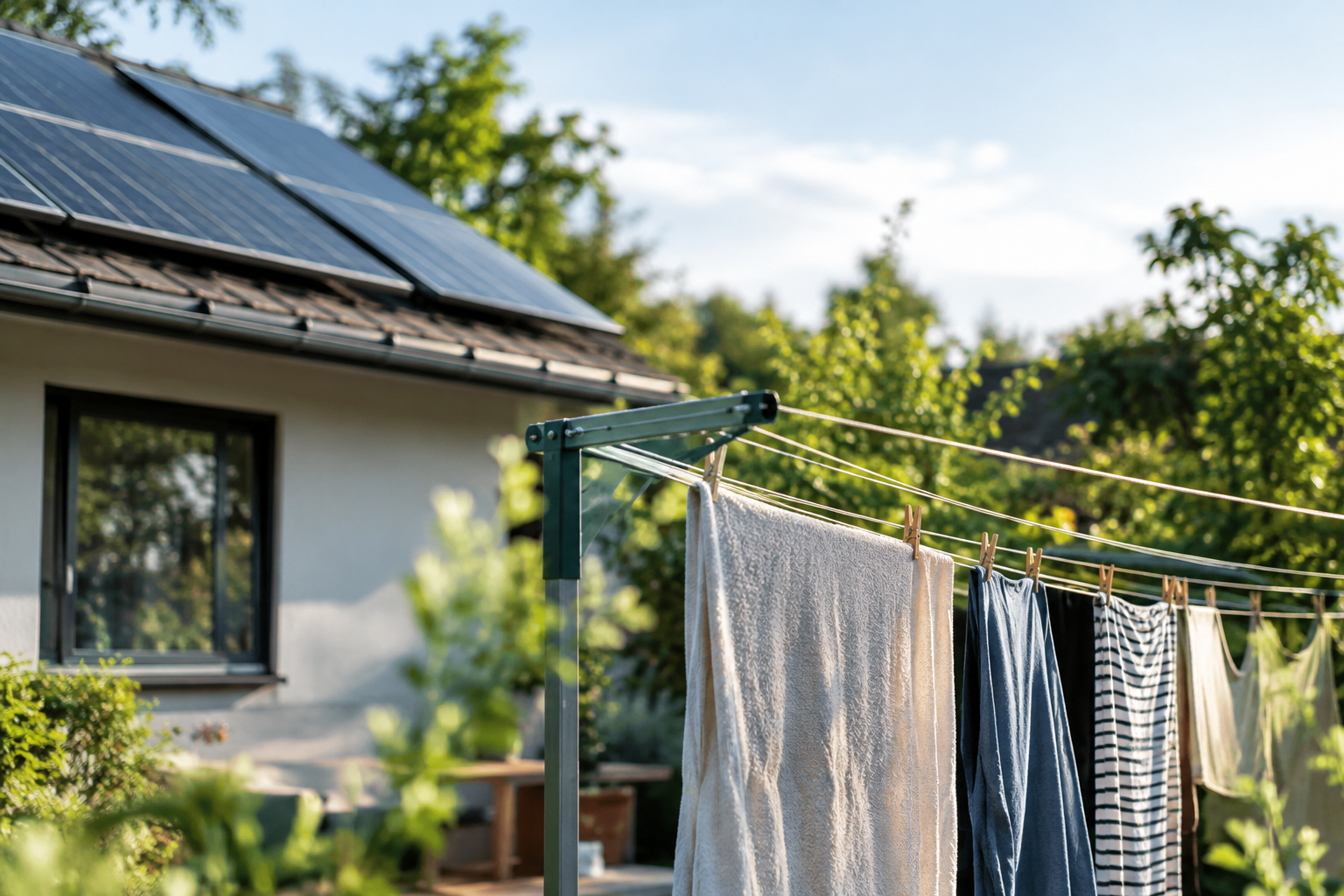
Michigan HOA Solar Panel and Clothesline Rules: What Boards Need to Know
Michigan has no state statute that mandates HOA or condominium associations allow solar panels, clotheslines, or other energy saving devices on residential property. Your association's power to restrict or permit these installations comes from your declaration of covenants, conditions, and restrictions and your architectural guidelines. This absence of state law creates flexibility for boards but also exposes associations to disputes when restrictions conflict with member priorities.
The Michigan Attorney General's office and the Michigan Department of Licensing and Regulatory Affairs oversee certain aspects of HOA governance, but neither agency has published binding rules on solar access. Courts in Michigan have upheld restrictive covenants that prohibit visible solar panels or outdoor drying equipment when those restrictions are clearly written in the governing documents and applied consistently.
What Your Governing Documents Control
Your declaration and architectural guidelines determine whether members may install solar panels, wind turbines, or clotheslines. If your documents prohibit any exterior alteration without board approval, that prohibition applies to solar equipment unless the board votes to create an exception. If your documents are silent on solar devices, members generally have the right to install them on their own property as long as the installation does not create a safety hazard or violate local building codes.
A 2019 dispute in Ann Arbor illustrates this dynamic. A homeowner in the Stonebridge Commons association installed rooftop solar panels without submitting an architectural review application. The association's declaration required written approval for any exterior modification. The board issued a violation notice and demanded removal of the panels. The homeowner argued that solar energy is a public good and that the restriction was unreasonable. The association prevailed in arbitration because the declaration plainly required preapproval and the homeowner had not requested it. The panels remained, but the homeowner paid a fine and was required to submit a formal application for retroactive approval.
Your board should review your architectural guidelines and determine whether they address solar panels, satellite dishes, clotheslines, wind turbines, or similar devices. If they do not, consider adopting clear standards that balance aesthetic concerns with member interest in energy efficiency. A well drafted guideline specifies permissible locations, mounting methods, color requirements, and screening or visibility limits.
Federal Law and Satellite Dishes
While Michigan has no solar rights statute, federal law preempts local restrictions on certain devices. The Federal Communications Commission's Over the Air Reception Devices rule prohibits unreasonable restrictions on satellite dishes smaller than one meter in diameter and antennas used to receive television broadcast signals. Your HOA cannot ban satellite dishes outright, but you may regulate placement to reduce visual impact as long as the regulation does not prevent reception or impose unreasonable costs.
This federal rule does not extend to solar panels or clotheslines. Your board may restrict those devices if your governing documents grant that authority.
Clothesline and Outdoor Drying Equipment
Michigan law does not protect a member's right to hang laundry outdoors. Your association may prohibit clotheslines, drying racks, or other outdoor drying equipment if your declaration or architectural guidelines include that restriction. Many associations drafted these prohibitions in the 1980s and 1990s when concerns about property values and aesthetic uniformity dominated board decisions.
Today, some boards face pressure from members who view outdoor drying as an energy saving measure and question whether blanket prohibitions are reasonable. If your documents prohibit clotheslines, you are not required to amend them, but you may choose to revisit the policy. Consider whether a compromise is possible, such as allowing portable drying racks in rear yards that are not visible from the street or requiring members to remove clotheslines when not in use.
Solar Panel Installation Trends in Michigan
Michigan ranks 20th in the United States for installed residential solar capacity as of 2025. The state offers a property tax exemption for the added value of renewable energy systems, and federal tax credits reduce the upfront cost of solar installation. These incentives drive demand among homeowners who want to reduce electricity costs and carbon emissions. Your board will likely see more solar applications in the coming years.
Detroit saw a 40 percent increase in residential solar permits between 2023 and 2025, and Grand Rapids reported a 32 percent increase over the same period. These numbers reflect broader interest in renewable energy, and HOAs in metro areas should prepare for solar requests even if they have not received any in the past.
What You Should Do Now
Pull your declaration, bylaws, and architectural guidelines. Identify any language that addresses exterior modifications, solar panels, satellite dishes, clotheslines, or energy devices. If your documents are silent, you may want to adopt a policy before a dispute arises. A clear policy reduces confusion and gives members advance notice of your standards.
If your documents prohibit solar panels or clotheslines, decide whether that prohibition still serves the association's interests. Consult your attorney for your specific situation to determine whether amending the restriction requires a member vote and what percentage of approval you need. Michigan condominium bylaws typically require a two thirds or three quarters vote to amend the master deed, while HOA declarations may require a different threshold.
Create an architectural review form specifically for solar panel applications. Include fields for panel size, mounting method, wiring path, roof penetration details, and aesthetic screening measures. Require applicants to submit a site plan, manufacturer specifications, and contractor credentials. Set a timeline for board review, such as 30 days from the date of a complete application. This process protects the board from claims of arbitrary decision making and ensures that every application receives consistent treatment.
If you approve a solar installation, document any conditions in writing. For example, you might require that panels be mounted flush with the roof, that wiring be concealed, that the homeowner maintain liability insurance, and that the homeowner restore the roof to its original condition if the panels are removed. These conditions become part of the approval and bind the homeowner.
Enforcement and Dispute Resolution
If a member installs solar panels or a clothesline without board approval and your documents require preapproval, you may issue a violation notice. Follow your standard enforcement process: send a written notice describing the violation, allow a cure period, and impose fines or other remedies if the violation continues. Do not selectively enforce the rule. If you require preapproval for one member's solar panels, you must require it for every member's solar panels.
Some members may argue that a restriction on solar panels is unreasonable or contrary to public policy. Michigan courts have held that restrictive covenants are enforceable as long as they are clear, serve a legitimate purpose, and are applied uniformly. A prohibition on visible solar panels is generally enforceable if it is written in your governing documents and you have enforced similar restrictions in the past.
If a dispute escalates, your board may need to pursue arbitration or mediation. Michigan law does not require HOAs to offer alternative dispute resolution, but many associations include ADR provisions in their governing documents. Check your bylaws and declaration to see whether you must attempt mediation before filing a lawsuit. ADR often resolves solar and clothesline disputes faster and at lower cost than litigation.
Practical Considerations for Solar Approvals
When a member submits a solar panel application, evaluate the proposal based on objective criteria. Consider the impact on neighboring properties, the structural integrity of the roof, the visibility of the panels from common areas and streets, and the compliance with local building codes. Do not reject an application simply because you dislike the appearance of solar panels. A vague or subjective reason for denial may expose the board to a claim of arbitrary enforcement.
Some boards require that solar panels be installed on rear roof slopes or that they match the color of the roof shingles. These aesthetic conditions are generally reasonable as long as they do not prevent effective solar generation or impose excessive costs. If your aesthetic requirement would reduce the system's energy output by more than 10 percent or increase installation costs by more than 20 percent, a court may find the requirement unreasonable.
Document your decision in board meeting minutes. Record the names of the board members who voted, the reasons for approval or denial, and any conditions attached to the approval. Keep copies of the application, site plan, and supporting materials in the homeowner's file. This documentation protects the board if the decision is later challenged.
Manorway and Energy Device Applications
Manorway's AI assisted platform helps you manage architectural review applications, track approval timelines, and store supporting documents in one place. You can create custom application forms for solar panels, clotheslines, and other energy devices, assign review tasks to board members or committee chairs, and generate approval letters with conditions automatically. When your board uses a centralized system to manage these requests, you reduce processing time and ensure that every application follows the same procedure.
The platform also maintains a history of past approvals and denials, which helps you apply standards consistently. If you approved solar panels on a south facing roof for one member in 2024, you can reference that decision when a similar request arrives in 2026. This consistency is critical for avoiding claims of selective enforcement and protecting the board from disputes.
Ready to modernize your HOA management?
Learn how Manorway can help your community operate more efficiently.
Get Started Today