Minnesota HOA Solar Panel and Clothesline Rules: What Boards Need to Know
Minnesota has no state law that overrides HOA restrictions on solar panels or clotheslines. Your association's authority to regulate these installations flows from your governing documents and architectural review process.
Minnesota HOA Solar Panel and Clothesline Rules: What Boards Need to Know
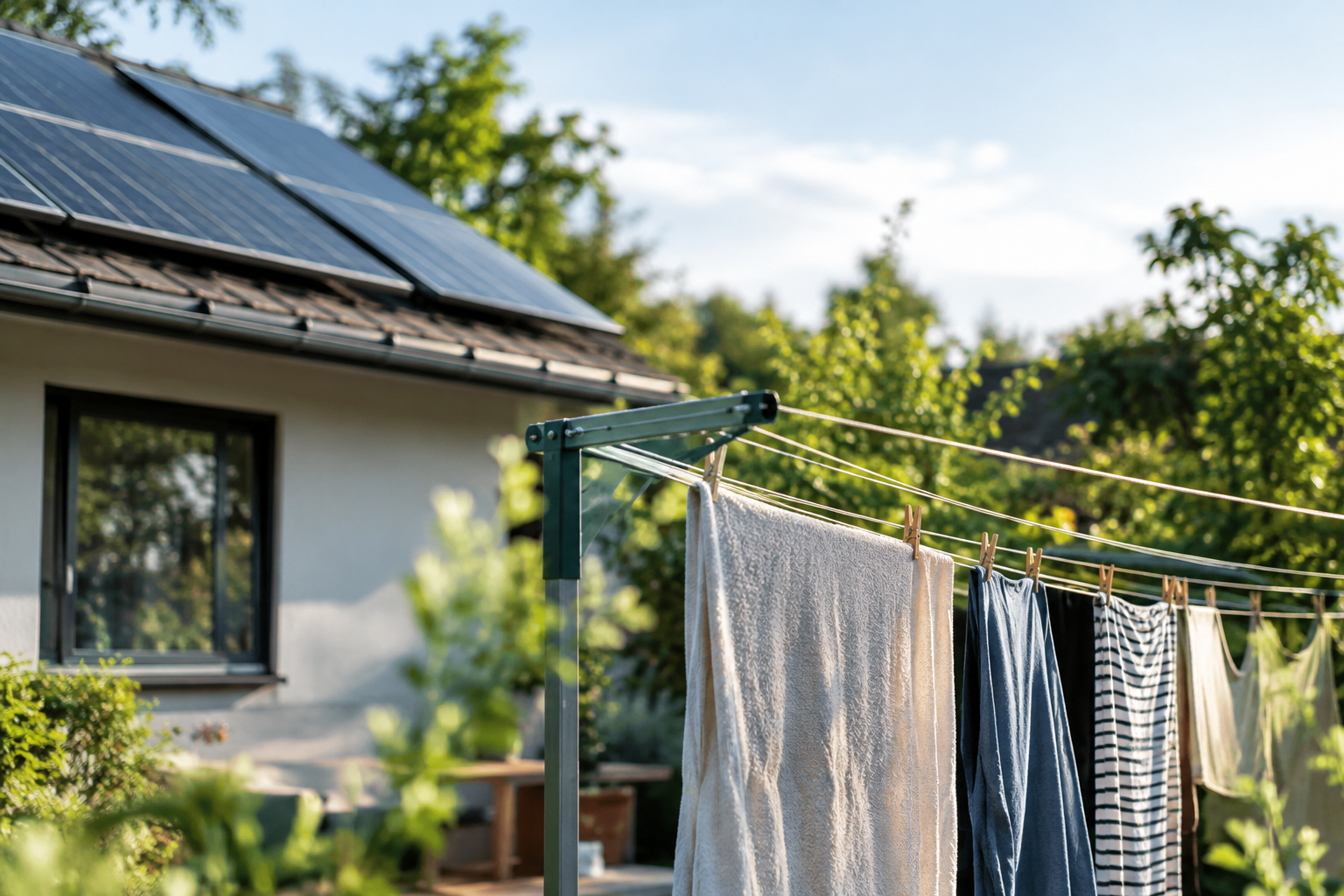
Minnesota has no state statute that prohibits homeowner associations from restricting solar panels or clotheslines. Your association's authority to regulate energy devices, exterior installations, and aesthetic standards flows entirely from your declaration of covenants and architectural review guidelines. This absence of preemptive state law gives your board significant control over whether members can install solar arrays or outdoor drying equipment, but it also creates the potential for disputes when members request these installations.
The Role of Governing Documents
Because Minnesota law does not mandate solar access rights for HOA members, your first step is to review your governing documents. Check your declaration of covenants for any language that addresses exterior modifications, roof installations, or energy devices. Many Minnesota associations adopted covenants in the 1980s and 1990s that include blanket prohibitions on exterior alterations without prior board approval. If your documents contain such a clause, you have the authority to deny a solar panel request or impose conditions on installation.
Your architectural review guidelines may provide additional detail. Some associations specify acceptable colors, mounting methods, or placement restrictions for roof mounted equipment. If your guidelines are silent on solar panels, you retain discretion to adopt standards that balance member interest in renewable energy with the community's aesthetic goals.
The same analysis applies to clotheslines. If your covenants prohibit outdoor drying racks or specify that laundry must be dried indoors or in screened areas, you can enforce that restriction. Minnesota courts have upheld HOA aesthetic covenants when they are applied consistently and reasonably.
What the Minnesota Attorney General's Office Oversees
The Minnesota Attorney General's office has authority to investigate complaints about HOA governance and fiduciary duty violations. While the Attorney General does not regulate solar panel disputes directly, the office can review whether your board followed proper procedure when denying a member's request. If your board denied a solar installation without a written explanation, without following your architectural review process, or in a manner that appears arbitrary, a member could file a complaint alleging breach of fiduciary duty.
Your board must apply your governing documents consistently. If you approved a satellite dish for one member but denied a solar panel for another without a documented rationale tied to your covenants, you risk a claim of selective enforcement. Document every architectural review decision in writing and cite the specific covenant or guideline that supports your ruling.
A Local Example from Edina
In 2019, a townhome association in Edina received a request from a unit owner who wanted to install a 12 panel solar array on the south facing slope of her roof. The association's covenants, adopted in 1987, prohibited any roof modifications that altered the roofline or installed visible equipment without board approval. The board denied the request, citing the covenant and the absence of Minnesota law requiring solar access.
The unit owner challenged the denial, arguing that the board's decision was arbitrary because the association had previously approved satellite dishes and roof vents. The board responded with a written explanation that satellite dishes and vents were smaller, less visible, and did not require structural roof modifications. The board also offered a compromise: the owner could install solar panels on the rear slope of the roof, which faced away from the street and was less visible to neighbors.
The unit owner accepted the compromise. The association updated its architectural guidelines to specify that solar panels must be installed on rear or side slopes when feasible and must use black or dark gray panels to minimize contrast with roofing materials. This example shows how a board can enforce aesthetic standards while accommodating renewable energy requests through negotiation and clear written policies.
Federal Solar Access Law
Although Minnesota has no state solar access statute, you must be aware of federal telecommunications law that may affect your authority. The Federal Communications Commission's Over the Air Reception Devices rule (OTARD) prohibits restrictions that impair the installation of antennas used to receive video programming signals. Some solar panel installers also install monitoring antennas or wireless communication devices as part of the system. If a member's solar installation includes a device covered by OTARD, your restriction may be preempted by federal law.
OTARD does not protect solar panels themselves, only the antennas and receiving equipment. However, if your denial of a solar request also prevents the installation of a protected device, you may face a federal claim. Consult your attorney for your specific situation if a member's request includes both solar panels and a wireless antenna.
Clothesline Rights and Energy Conservation
Some states have enacted clothesline protection laws that prevent HOAs from banning outdoor drying equipment. Minnesota is not one of those states. Your association can prohibit clotheslines, drying racks, and other outdoor laundry equipment if your covenants include a general restriction on exterior structures or aesthetic devices.
If your covenants are silent on clotheslines, your board has discretion to adopt a policy. You can allow clotheslines in rear yards only, require them to be removed when not in use, or prohibit them entirely. Document your decision in writing and apply it uniformly.
Some members may argue that clotheslines are an energy conservation measure and should be permitted on environmental grounds. This argument has no legal weight in Minnesota unless your governing documents include an energy conservation exception. Your board is not required to override aesthetic restrictions to accommodate energy saving preferences.
Adopting a Solar and Clothesline Policy
If your association has received multiple requests for solar panels or clotheslines, consider adopting a written policy that clarifies your standards. A policy should address placement, visibility, size, color, structural impact, and the approval process. Specify whether you will allow solar panels on front facing slopes, how many panels are permissible, and what mounting methods are acceptable.
For clotheslines, specify whether you will allow permanent posts, retractable lines, or folding racks. Define the areas of the property where clotheslines may be installed and whether they must be removed or folded when not in use. A clear policy reduces disputes and gives members predictable guidance.
Present the draft policy to your members at an annual meeting or through written notice. While you are not required to obtain member approval under Minnesota law, sharing the policy in advance allows members to provide input and reduces the perception that the board is acting unilaterally.
What Boards Should Do Now
Pull your declaration of covenants, architectural review guidelines, and any amendments. Search for language that addresses exterior modifications, roof installations, or energy devices. If your documents are silent, your board has broad discretion to adopt standards.
Create a one page checklist that your architectural review committee can use to evaluate solar panel and clothesline requests. Include criteria such as visibility from the street, structural impact, compliance with local building codes, and consistency with existing installations. Require applicants to submit a site plan, photographs, and contractor specifications before your committee reviews the request.
Document every approval or denial in writing. If you deny a request, cite the specific covenant or guideline that supports your decision and explain the board's rationale. Offer alternatives when possible, such as allowing installation on a less visible roof slope or permitting a retractable clothesline instead of a permanent post.
Consult your attorney for your specific situation if a member threatens litigation over a denied solar panel request or if a request includes equipment that may be protected by federal OTARD rules.
How Manorway Supports Solar and Clothesline Decisions
Manorway's AI assisted platform helps your board track architectural review requests, store governing documents, and maintain a record of approval decisions. You can upload your covenants and guidelines, create custom checklists for solar and clothesline applications, and generate denial letters that cite the relevant provisions. When your board uses a centralized platform to manage architectural reviews, you reduce the risk of inconsistent decisions and create an audit trail that protects the association in disputes.
Manorway also helps you schedule committee meetings, send notices to applicants, and track the status of pending requests. If you adopt a new solar or clothesline policy, you can store it in the platform and share it with members through automated notices. The platform does not make decisions for you, but it gives you the tools to document your process and apply your standards consistently.
Ready to modernize your HOA management?
Learn how Manorway can help your community operate more efficiently.
Get Started Today