Montana HOA Solar Panel and Clothesline Rules: What Boards Can and Cannot Restrict
Montana does not have a state statute that protects homeowners' rights to install solar panels or clotheslines against HOA restrictions. Your association's authority to regulate these items flows entirely from your governing documents.
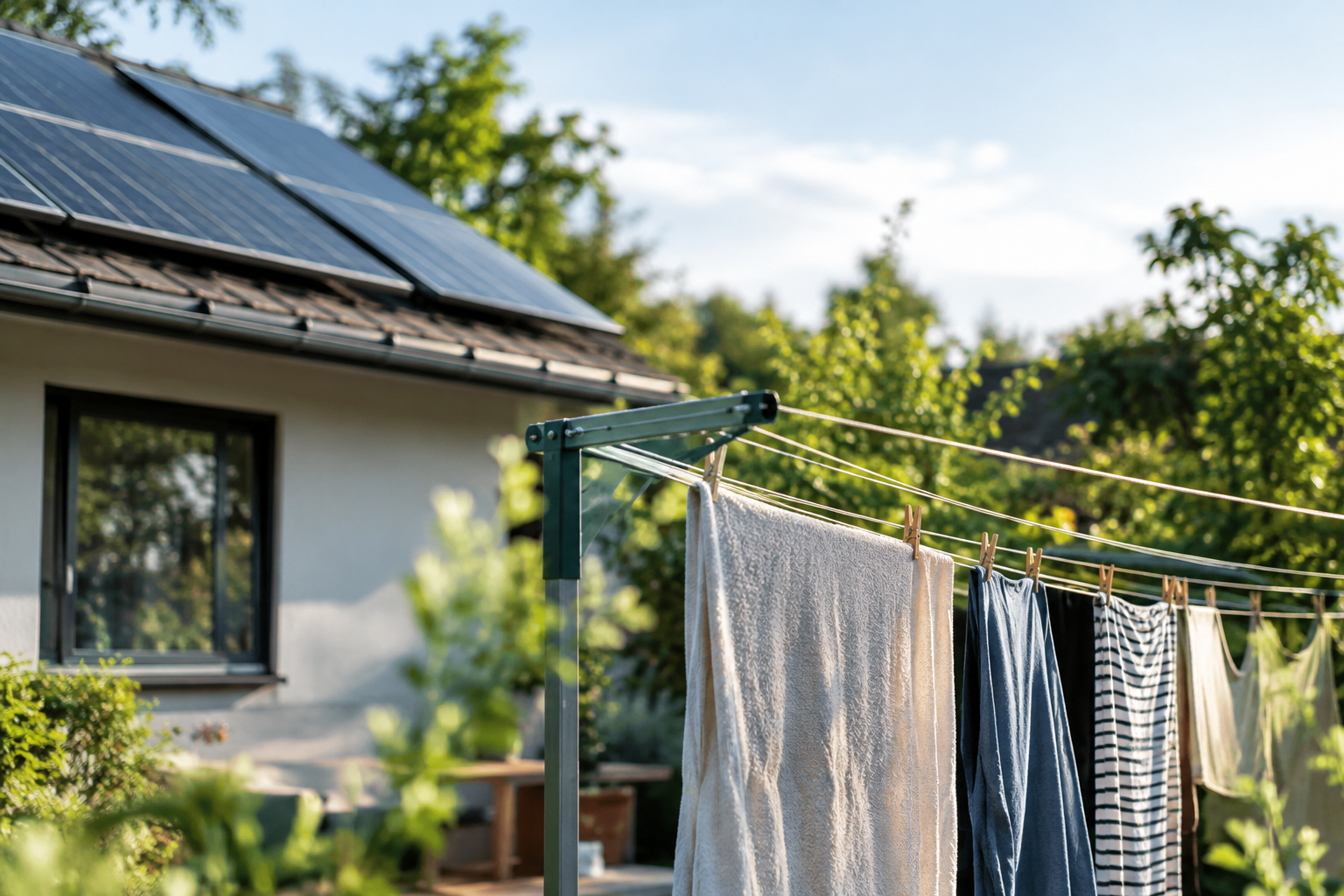
Montana HOA Solar Panel and Clothesline Rules: What Boards Can and Cannot Restrict
Montana does not have a state statute that protects homeowners' rights to install solar panels or clotheslines against HOA restrictions. Your association's authority to regulate these items flows entirely from your governing documents. Unlike states such as California, Colorado, or Florida that have enacted solar access laws limiting HOA power, Montana leaves these decisions to private covenant enforcement.
The Montana Department of Justice oversees consumer protection and can investigate complaints about HOA governance practices, but it does not enforce specific solar or energy device mandates. Your board's ability to approve, condition, or deny a solar panel installation or clothesline depends on what your declaration of covenants and architectural guidelines say. If your documents are silent, you may still have authority under general aesthetic or nuisance provisions.
The Most Common Mistake Montana Boards Make
The most frequent error is assuming your HOA has no authority to regulate solar panels or clotheslines simply because Montana law does not address them. The absence of state law does not create a protected right for homeowners. If your covenants require architectural approval for any exterior modification, that requirement applies to solar arrays and clotheslines just as it applies to fences, decks, or paint color changes.
A concrete example: the Bitterroot Valley Homeowners Association in Ravalli County discovered this mistake in 2019 when a homeowner installed a ground mounted solar array without submitting an application. The homeowner argued that because Montana has no solar access law, the association could not enforce its architectural review process. The board consulted its attorney and learned that its covenants required written approval for any structure or improvement visible from neighboring lots. The association sent a violation notice, and the homeowner eventually submitted a retroactive application. The board approved the array with conditions on height and setback, but the dispute cost both parties time and created tension that could have been avoided with a clear upfront process.
Another common mistake is creating inconsistent standards. Some boards approve rooftop solar for one home and deny it for another without documenting the difference in circumstances. When you apply architectural rules unevenly, you expose the association to claims of selective enforcement or discrimination. Document every decision with specific reasoning tied to your governing documents.
What Your Governing Documents Likely Say
Most Montana HOA declarations include a section on architectural control that requires members to submit plans for exterior changes. Your covenants may use terms like "structure," "improvement," "alteration," or "addition." Solar panels typically fall under one or more of these categories because they are attached to the roof or installed on the ground and are visible from adjacent properties.
Clotheslines may be addressed directly in nuisance or aesthetic provisions. Some declarations prohibit outdoor drying of laundry explicitly, while others define nuisances to include anything that diminishes property values or creates visual clutter. If your covenants do not mention clotheslines, you may still regulate them under a general standard such as "no unsightly conditions" or "no uses that interfere with residential character."
Review your architectural guidelines as well. Many associations have adopted standards that supplement the declaration. Guidelines can specify acceptable solar panel colors, mounting methods, visible wiring, and setback distances. They can also define where clotheslines may be located, what type of materials are allowed, and whether they must be retractable.
What You Can and Cannot Restrict
Because Montana law does not limit your authority, you can impose reasonable conditions on solar installations and clotheslines as long as those conditions are consistent with your governing documents and applied uniformly. Reasonable conditions might include requiring flush mounted panels that match the roof slope, prohibiting ground mounted arrays in front yards, or requiring landscaping screens around equipment.
You cannot, however, create restrictions that violate federal law or constitutional rights. For example, you cannot ban solar panels solely because a board member dislikes renewable energy or deny approval based on a homeowner's political views. You also cannot enforce a blanket prohibition on solar if your covenants do not grant that authority.
Clotheslines present a similar balance. You can regulate location, size, materials, and visibility. You can require that lines be removed when not in use or that they be placed in backyards only. You cannot enforce restrictions that are arbitrary, such as allowing one member to hang laundry but denying another without a documented reason.
Montana's Energy Context and Board Considerations
Montana receives an average of 190 sunny days per year, and solar adoption has grown steadily in cities like Missoula, Billings, and Bozeman. As of 2023, Montana had more than 4,000 residential solar installations, a 30 percent increase from 2020. This growth means your board is more likely to receive solar applications in the next two years than in the past decade.
The state offers a residential alternative energy system tax credit of up to $500, and federal investment tax credits cover 30 percent of solar installation costs through 2032. These incentives encourage homeowners to pursue solar, which increases the importance of having a clear, documented review process.
Clothesline requests may also rise as energy costs increase. Montana's average residential electricity rate was 12.3 cents per kilowatt hour in 2024, and propane and natural gas prices have fluctuated significantly. Some homeowners view outdoor drying as a practical cost saving measure, particularly in rural areas.
What You Should Do Now
Pull your declaration, bylaws, and architectural guidelines. Identify every section that mentions exterior modifications, structures, improvements, aesthetic standards, or nuisances. Create a checklist of what your documents require for approval and what criteria you use to evaluate applications.
Draft or update your architectural guidelines to address solar panels and clotheslines specifically. Include sample layouts, acceptable materials, setback requirements, and approval timelines. Share these guidelines with members before you receive the first application. When homeowners know the standards in advance, they are more likely to submit compliant plans.
Consult your attorney for your specific situation to confirm that your proposed standards are enforceable and consistent with your covenants. An attorney can also help you draft language for design review forms and violation notices.
Manorway's AI assisted platform helps you track architectural applications, store governing documents, and maintain a record of board decisions. You can create templates for solar and clothesline review, set reminders for response deadlines, and document the reasoning behind each approval or denial. When your board uses consistent processes and keeps detailed records, you reduce the risk of disputes and protect the association from claims of arbitrary enforcement.
Ready to modernize your HOA management?
Learn how Manorway can help your community operate more efficiently.
Get Started Today