Nevada HOA Drone and Surveillance Rules: What Privacy Law Allows
Nevada law does not provide a specific statute governing HOA use of drones or surveillance cameras. Your association's authority to regulate aerial photography and security monitoring flows from your CC&Rs, common law trespass principles, and Nevada privacy statutes that protect residents from unlawful intrusion.
Nevada HOA Drone and Surveillance Rules: What Privacy Law Allows
Nevada has no state statute that specifically addresses homeowner association use of drones or surveillance cameras. Your association's authority to regulate aerial photography, security monitoring, and other surveillance technologies comes from your covenants, conditions, and restrictions, Nevada common law on trespass and privacy, and general criminal statutes that prohibit voyeurism and unlawful intrusion. The Nevada Attorney General's office oversees consumer protection and privacy complaints, but it does not provide specific guidance on HOA drone policy.
This legal silence creates both flexibility and risk. Your board can adopt surveillance rules tailored to your community's needs, but you must respect Nevada privacy law and avoid policies that could expose the association to liability for invasion of privacy, trespass, or discrimination.
What Nevada Privacy Law Protects
Nevada Revised Statutes Chapter 200 includes criminal penalties for invasion of privacy and voyeurism. NRS 200.603 makes it a gross misdemeanor to use a device to observe or photograph a person in a private place without consent when the person has a reasonable expectation of privacy. A "private place" includes a bathroom, bedroom, or any location where a person would reasonably expect to be safe from intrusion.
This statute applies to any person or entity, including HOAs. If your association installs a camera that captures images inside a unit through a window, or if a board member uses a drone to photograph a homeowner's backyard where the person has a reasonable expectation of privacy, the association and the individual could face criminal charges and civil liability.
Nevada also recognizes the common law tort of invasion of privacy. Courts in Nevada have held that a plaintiff may recover damages if the defendant intentionally intrudes upon the plaintiff's solitude or private affairs in a manner that would be highly offensive to a reasonable person. This tort does not require a criminal violation. A civil lawsuit can proceed even if no criminal charge is filed.
Drones and Aerial Surveillance in Nevada
Nevada law does not prohibit drones outright, but federal and state rules limit where and how you can operate them. The Federal Aviation Administration regulates all airspace, and recreational drone operators must follow FAA rules, including altitude limits, line of sight requirements, and no fly zones near airports. Clark County, which includes Las Vegas and Henderson, has local ordinances that restrict drone operations in certain parks and public spaces.
Your HOA can adopt rules that prohibit homeowners from launching or landing drones within the community. Because the association owns or controls common areas, the board has authority to restrict activities on those properties. However, the association cannot regulate airspace above the community because federal law preempts state and local control of navigable airspace.
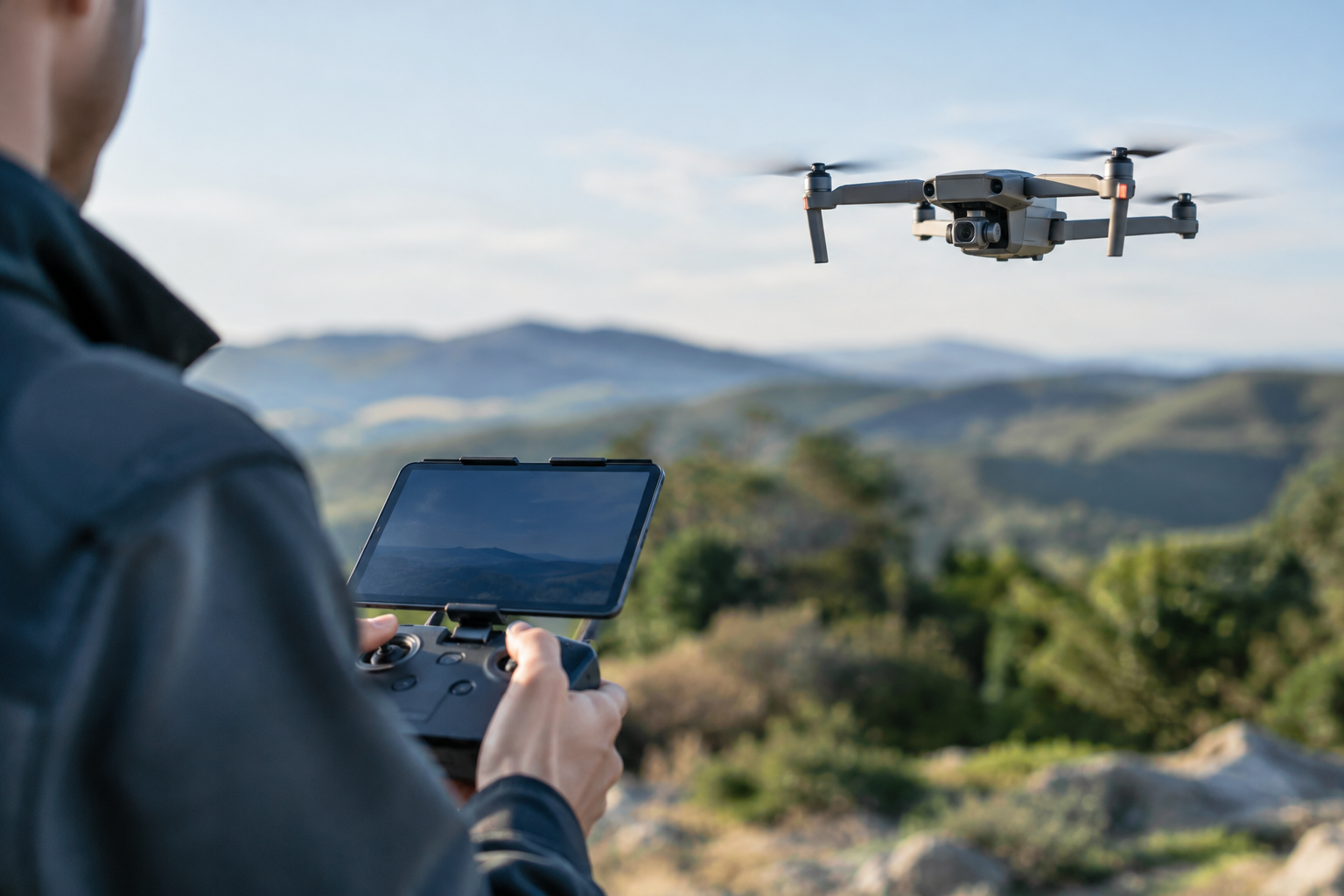
If your board wants to use drones for property inspections, roof surveys, or security monitoring, you must comply with FAA rules and respect homeowner privacy. A drone hovering outside a second story window to photograph the interior of a unit likely violates NRS 200.603. A drone capturing images of common area roofs, parking lots, or landscaping from an altitude that does not intrude on private spaces is generally permissible, but your governing documents should authorize this use and specify how images will be stored and who can access them.
A real example: In 2019, a condominium association in Henderson used a drone to inspect roof damage after a summer storm. The board hired a licensed contractor who operated the drone at an altitude above 50 feet and captured only overhead images of rooftops and common area structures. The association provided written notice to all unit owners 10 days before the flight, explained the purpose of the inspection, and offered to share the resulting photos with any owner who requested them. No complaints were filed, and the inspection identified hail damage that the association repaired under its master insurance policy, saving unit owners thousands in potential special assessments.
This example shows best practice: advance notice, a clear purpose, an operator who follows FAA rules, and transparency about how images will be used. Your association should document the same process if you plan to use drones for inspections or monitoring.
Security Cameras on Common Property
Your association may install security cameras on common areas such as parking lots, entrances, pool areas, and walking paths. Nevada law does not prohibit surveillance cameras in public or semi public spaces where individuals do not have a reasonable expectation of privacy. However, cameras must not be positioned to capture images inside private residences or private enclosed yards.
Before installing cameras, review your governing documents. Some CC&Rs require a membership vote or a super majority board vote to approve capital expenditures above a certain dollar amount. Security camera systems often exceed these thresholds, especially if they include cloud storage, monitoring contracts, and professional installation.
Your board should also adopt a written policy that specifies where cameras will be placed, how long footage will be retained, who can access the footage, and under what circumstances footage will be shared with law enforcement or used in legal proceedings. Nevada Revised Statutes Chapter 603A governs data privacy and security of personal information, and recorded video footage that captures identifiable individuals may qualify as personal information subject to reasonable security measures.
A concrete example: The Red Rock Hills Homeowner Association in Summerlin installed 12 security cameras at its main entrance, two side gates, and the clubhouse parking lot in 2021. The board adopted a policy that limited footage retention to 30 days, restricted access to the property manager and two designated board members, and required a written request and legal justification before releasing footage to anyone outside the association. When a vehicle collision occurred in the clubhouse parking lot in 2022, the association provided footage to the involved parties' insurance companies after receiving signed release forms. The policy protected the association from liability and gave homeowners confidence that their movements were not being monitored without limits.
What Your Governing Documents Allow
Your CC&Rs and bylaws control what surveillance activities the association can conduct and what restrictions the board can place on homeowners. If your documents give the board authority to adopt rules for the "health, safety, and welfare" of the community, that language likely supports reasonable security camera policies. If your documents require the board to maintain common areas in good repair, that duty may justify drone inspections to assess roofs, siding, or landscaping.
However, if your documents are silent on surveillance or if they explicitly prohibit recording devices on common property, your board must amend the documents before implementing a camera or drone program. Amendments typically require approval by a super majority of members, often 67 percent or 75 percent of the total voting power.
Your board should also review any architectural control provisions. If a homeowner wants to install a doorbell camera, exterior security camera, or other recording device that is visible from the street or common areas, the homeowner may need approval from the architectural review committee. Your board can adopt standards that allow such devices if they are unobtrusive, do not capture neighbors' private spaces, and comply with manufacturer installation guidelines.
Homeowner Drone Use and Restrictions
Your association can adopt rules that restrict homeowner use of drones within the community. Because the association controls common areas, the board can prohibit launching, landing, or operating drones on common property. The association can also prohibit drones from hovering low over other homeowners' yards or capturing images of private areas such as patios, pools, or windows.
A reasonable rule might read: "No homeowner, tenant, or guest may launch, land, or operate a drone within the boundaries of the community. This restriction applies to all common areas and to airspace below 50 feet above any private lot. Drones operated by the association's authorized contractors for maintenance or inspection purposes are exempt from this rule, provided that the association gives 10 days' written notice to all homeowners before any flight."
This language respects federal control of airspace, protects homeowner privacy, and allows the association to use drones for legitimate business purposes. Your board should work with your attorney to draft language that fits your community's layout and needs. Consult your attorney for your specific situation.
Enforcement and Liability
If a homeowner violates your drone or surveillance rules, your association's enforcement options depend on your governing documents and Nevada law. Most CC&Rs allow the board to impose fines for rule violations after providing notice and an opportunity to be heard. Nevada Revised Statutes Chapter 116, which governs common interest communities, requires that your board follow a fair and consistent process when imposing fines.
If a homeowner uses a drone in a way that invades another homeowner's privacy, the affected homeowner may file a complaint with the association, demand that the board enforce the rules, or sue the offending homeowner directly for invasion of privacy or nuisance. The association is not automatically liable for one homeowner's misconduct, but the board has a duty to enforce rules that protect all members.
If the association itself uses drones or cameras in a way that violates Nevada privacy law, the association can face both criminal charges and civil lawsuits. The board members who approved the policy may also face personal liability if they acted outside the scope of their authority or in bad faith.
What You Should Do Now
Review your CC&Rs and bylaws to determine what authority your board has to adopt surveillance and drone policies. Check whether your documents require a membership vote for security expenditures or rule changes. If your documents are silent on drones and cameras, consider whether an amendment is necessary or whether the board's general rule making authority is sufficient.
Draft a written policy that addresses security cameras, drone inspections, and homeowner drone use. Include specific language about where cameras can be placed, how footage will be stored and accessed, what notice will be given before drone flights, and what restrictions apply to homeowner drones. Share the draft with your attorney and your membership before adopting it.
If you plan to install cameras or use drones for inspections, obtain written consent from your attorney that the proposed activity complies with Nevada privacy law and your governing documents. Create a checklist that your property manager or board members can follow each time a camera is repositioned or a drone flight is planned.
Manorway's AI assisted platform helps you track surveillance policies, store governing documents, and schedule compliance reviews. You can upload your drone and camera rules, set reminders to review them annually, and maintain a record of all board approvals and member notices. When your board uses a centralized system to manage these policies, you reduce the risk of inconsistent enforcement and create a clear audit trail that protects the association in disputes.
Ready to modernize your HOA management?
Learn how Manorway can help your community operate more efficiently.
Get Started Today