New Hampshire HOA Drone and Surveillance Rules: What Privacy Law Allows
New Hampshire has no state statute that regulates HOA drone use or surveillance camera installation. Your association's authority to adopt drone and camera policies flows from your governing documents and common law privacy rights.
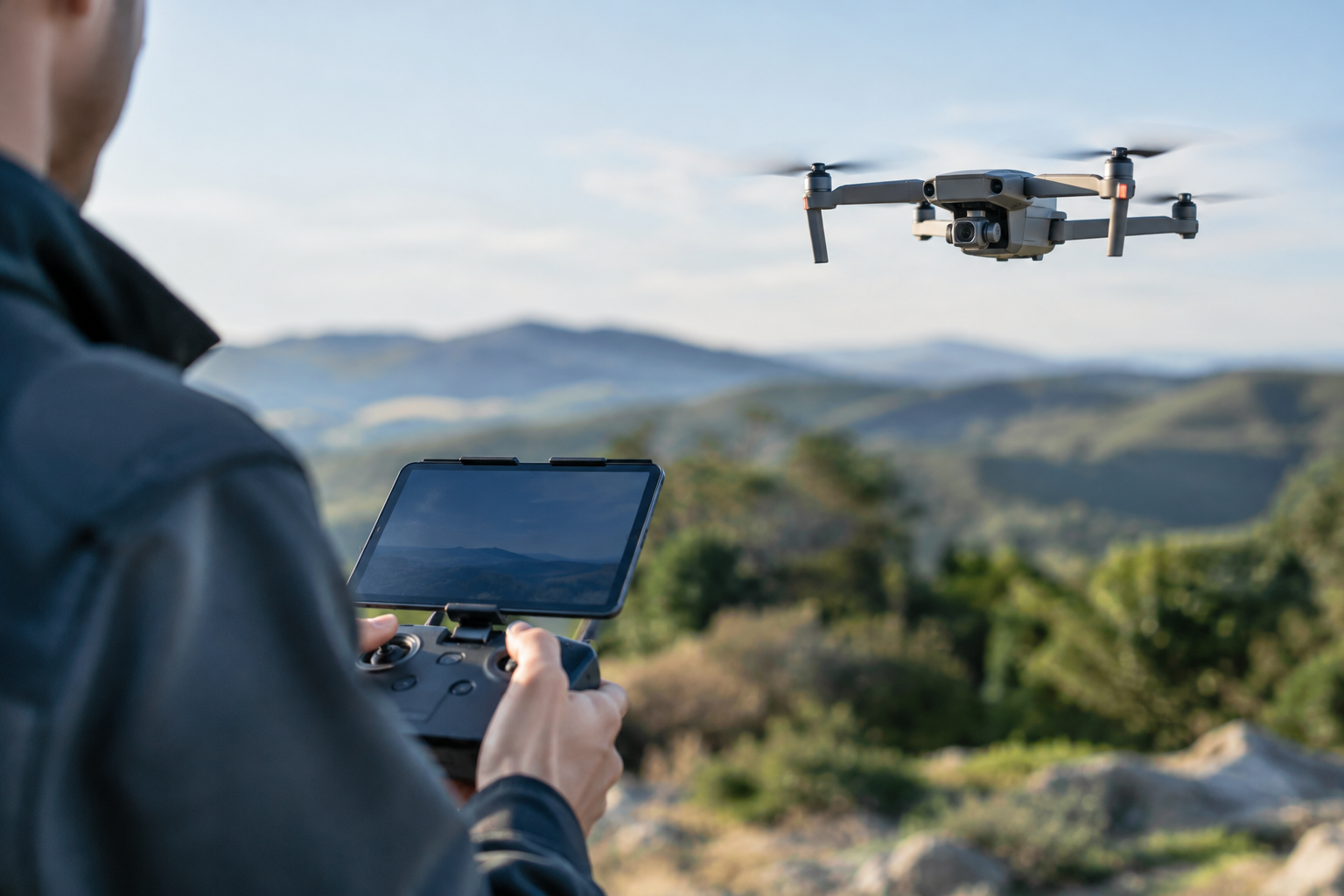
New Hampshire HOA Drone and Surveillance Rules: What Privacy Law Allows
New Hampshire has no state statute that regulates HOA drone use or surveillance camera installation on common property. Your association's authority to adopt drone and camera policies flows from your governing documents, common law privacy rights, and federal aviation rules. The New Hampshire Attorney General's office oversees consumer protection and privacy complaints, but state law does not prescribe specific HOA drone or surveillance camera protocols.
Because New Hampshire law is silent on HOA drones and cameras, your board has flexibility to adopt reasonable policies that balance security needs with member privacy. However, the absence of a state statute does not give your board unlimited authority. You must follow your declaration and bylaws, respect common law privacy expectations, and comply with Federal Aviation Administration regulations for drone operation.
What Federal Law Requires for Drone Operation
The FAA governs all drone flights in the United States, including flights over HOA and condominium property. Under Part 107 of the Federal Aviation Regulations, your board or any member who operates a drone for association business must register the drone if it weighs more than 0.55 pounds. If you are flying a drone to inspect roofs, document property damage, or capture photos of common areas for maintenance purposes, you need a Remote Pilot Certificate unless you qualify for the recreational exception under 44809.
The FAA prohibits drone flights over people who are not directly participating in the operation unless the drone meets specific safety criteria. If your board hires a contractor to fly a drone over the clubhouse parking lot during business hours, that contractor must follow FAA safety rules and avoid flying directly over members or guests. The FAA also prohibits nighttime drone flights without a waiver and requires drones to stay below 400 feet in most airspace.
New Hampshire has approximately 60 percent of its population concentrated in the southeastern counties near Manchester, Nashua, and Portsmouth. In these denser communities, drone flights over residential areas create more privacy concern than in rural developments. Your board should consider population density when drafting a drone policy.
What Common Law Privacy Rules Allow
New Hampshire common law recognizes a tort claim for invasion of privacy, including intrusion upon seclusion. If a drone operator or surveillance camera captures images inside a member's home through a window, or records a member in a location where they have a reasonable expectation of privacy, that member may have a legal claim. Courts in New Hampshire apply a reasonableness standard. A camera pointed at a common area walkway is less likely to violate privacy than a camera aimed at a bedroom window.
Your board may install security cameras on common property to deter theft, monitor entry gates, or document vandalism. However, you must avoid capturing images of private patios, interior spaces, or areas where members expect privacy. A concrete example: a condominium association in Concord installed security cameras at the mailroom entrance in 2019 to investigate package theft. The cameras captured only the common hallway and mailroom interior, not individual unit doors or windows. No unit owner filed a privacy complaint, and the camera footage helped police recover stolen packages.
If your board plans to install cameras, review the proposed camera angles and confirm that no camera points directly at a window or private outdoor space. Post clear signage that informs members and guests that video surveillance is in use. Store footage securely and limit access to board members, property managers, and law enforcement when necessary.
What Your Governing Documents Control
Your declaration and bylaws determine whether your board has authority to adopt drone and surveillance policies. Many New Hampshire associations have declarations written in the 1980s or 1990s that do not mention drones or electronic surveillance. If your documents are silent, your board may still adopt reasonable rules under general rulemaking authority, but you should confirm that your bylaws allow the board to regulate member conduct on common property.
Some governing documents explicitly prohibit members from operating drones over association property or installing cameras that capture common areas. Other documents grant the board broad authority to adopt safety and nuisance rules. Read your declaration, bylaws, and any recorded amendments to identify any language that addresses surveillance, photography, or aerial devices.
If your documents do not address drones, your board may adopt a policy that requires members to notify the board before flying a drone over association property, prohibits drone flights below a certain altitude over private units, and bans drone photography that captures interior spaces. Draft the policy in plain language and circulate it to members with at least 30 days notice before enforcement begins.
What You Should Do Next
Review your association's declaration and bylaws to confirm whether they address surveillance, photography, or unmanned aircraft. Check whether your board has authority to adopt rules governing member use of common property. If your documents are silent, consult your attorney to determine whether you may adopt a drone and camera policy under general rulemaking authority.
Draft a written policy that covers board use of drones and cameras for maintenance or security purposes, member use of drones over association property, and installation of private cameras that may capture common areas. Include specific requirements such as FAA registration, altitude limits, restricted flight times, and prohibited camera angles. Circulate the draft to members for comment and revise it based on feedback.
If your board plans to install security cameras, obtain quotes from at least two vendors and confirm that the proposed system complies with common law privacy standards. Post signage at all camera locations and include a statement in your newsletter that explains why cameras are being installed and how footage will be stored. Consult your attorney for your specific situation to review the policy and camera placement before installation.
Manorway's AI assisted platform helps you draft drone and surveillance policies, track member comments, and store governing documents in one secure location. When your board uses Manorway to manage policy development, you create a clear record of member input and board decisions that protects the association if a dispute arises.
Privacy and Security in Balance
New Hampshire's lack of a specific HOA drone or surveillance statute gives your board flexibility to tailor policies to your community's needs. A condominium complex near Portsmouth with high package theft may benefit from mailroom cameras, while a rural single family HOA in the White Mountains may need a drone policy that addresses wildlife monitoring or roof inspections after winter storms. Your policy should reflect your community's layout, population density, and security concerns.
When you adopt a drone or camera policy, focus on transparency and member communication. Explain the purpose of the policy, how it will be enforced, and what penalties apply for violations. Invite members to submit questions or concerns during the comment period. A policy that members understand and support is easier to enforce and less likely to generate legal disputes.
Your board's goal is to protect the community without overreaching into members' private spaces. Drones and cameras are tools that can improve security and document property conditions, but they must be used responsibly and within legal boundaries. When you balance security needs with privacy rights, you create a safer and more respectful community.
Ready to modernize your HOA management?
Learn how Manorway can help your community operate more efficiently.
Get Started Today