New Mexico HOA Flag Display Rules: What Your Board Must Allow
New Mexico has no state statute governing HOA flag display restrictions, but federal law under the Freedom to Display the American Flag Act protects homeowners who fly the United States flag. Your board cannot prohibit the U.S. flag, though you may enforce reasonable time, place, and manner restrictions.
New Mexico HOA Flag Display Rules: What Your Board Must Allow
New Mexico has no state statute that specifically governs homeowner association rules on flag display. Your board's authority to regulate flags flows from your governing documents and must comply with federal law. The Freedom to Display the American Flag Act of 2005, codified at 4 U.S.C. § 5 Note, protects the right of homeowners to display the United States flag even when your association's covenants would otherwise prohibit it.
What Federal Law Requires
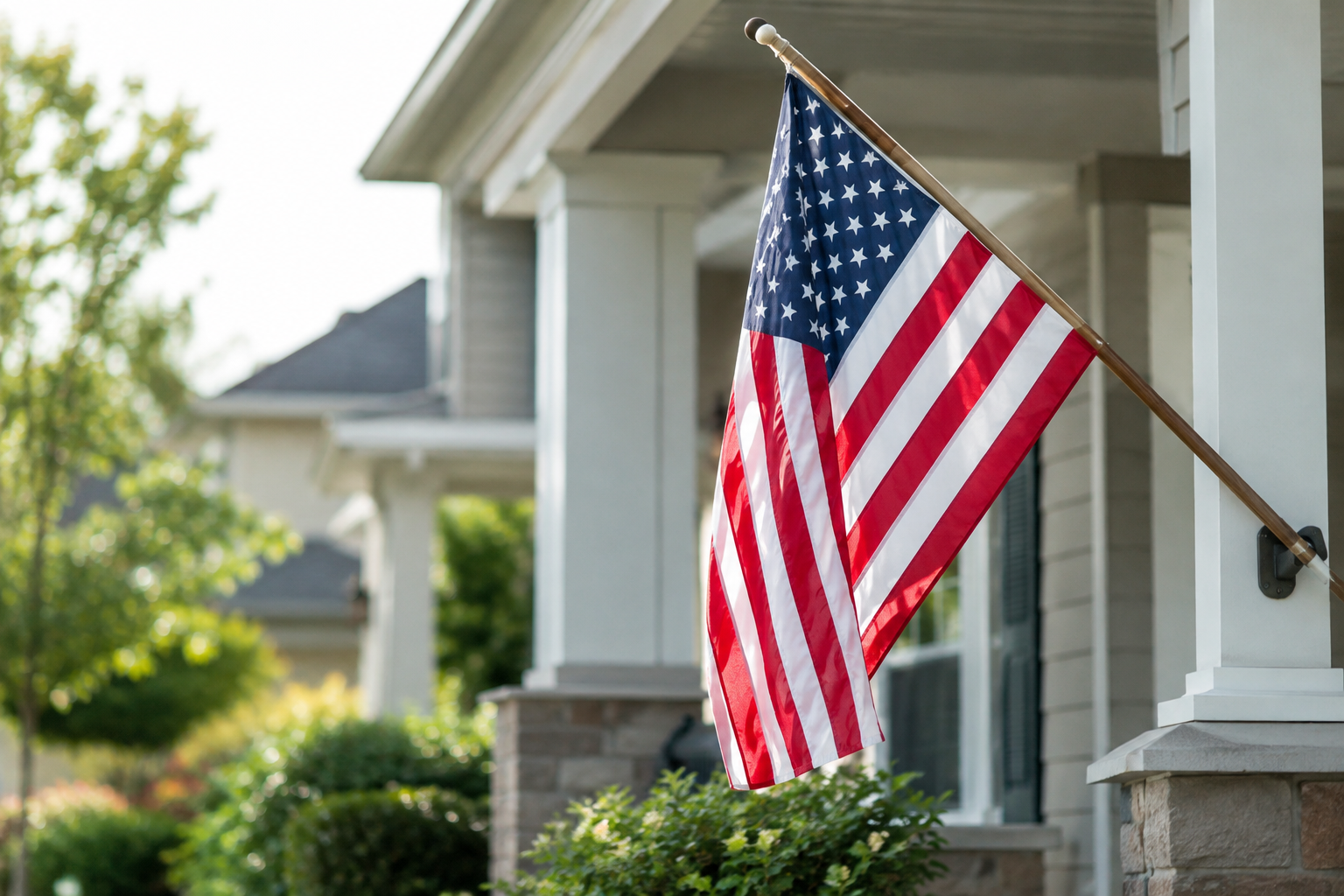
The Freedom to Display the American Flag Act prohibits any homeowner association from adopting or enforcing a policy that prevents members from displaying the flag of the United States on property they own or control. Your board cannot ban the American flag outright. You cannot prohibit flagpoles on which the U.S. flag is mounted. You cannot impose fines or initiate enforcement actions against a homeowner solely because they fly the American flag.
Federal law does allow your board to impose reasonable restrictions on the time, place, and manner of flag display. You may require that flags be kept in good repair, that flagpoles not exceed a certain height for safety or aesthetic reasons, and that flags be displayed in accordance with the United States Flag Code at 4 U.S.C. §§ 4 through 10. You may also enforce setback requirements that apply uniformly to all outdoor structures, including flagpoles.
A reasonable time restriction might limit the hours during which a floodlit flag may be displayed if the light disturbs neighboring units. A reasonable place restriction might require that freestanding flagpoles be located in the front yard rather than side yards adjacent to common areas. A reasonable manner restriction might specify that flags be mounted securely so they do not create a hazard during high wind events common in eastern New Mexico counties like Roosevelt and Curry.
State Flags and Other Flags
Because New Mexico has no statute addressing the display of the New Mexico state flag or other flags, your board's authority over non U.S. flags depends entirely on your covenants and bylaws. If your declaration prohibits all flags except as allowed by law, homeowners have no protected right to fly the New Mexico state flag, military service flags, or decorative flags.
Some associations adopt resolutions that permit the display of the New Mexico state flag, POW MIA flags, and flags representing branches of the United States Armed Forces. These resolutions typically impose the same time, place, and manner restrictions that apply to the U.S. flag. You are not required by state or federal law to allow these flags, but many boards choose to do so as a matter of policy.
If your governing documents are silent on flags other than the U.S. flag, you should consult your attorney before attempting to enforce a ban. Courts in other states have held that vague covenant language does not clearly prohibit flags, and that ambiguity is resolved in favor of the homeowner.
Enforcement and Disputes
When a homeowner violates your flag display rules, your first step is to send a written notice citing the specific covenant or rule being violated and describing the required corrective action. If the violation involves the U.S. flag, your notice must explain that you are not prohibiting the flag itself but are enforcing a reasonable time, place, or manner restriction.
Document the violation with dated photographs. Measure the height of the flagpole if your rules impose a height limit. Note the condition of the flag if your rules require flags to be kept in good repair. If the homeowner disputes your enforcement action, this documentation will support your position.
A concrete example from New Mexico: in 2019, the Valle Encantado Homeowners Association in Rio Rancho sent violation notices to three homeowners who installed flagpoles exceeding the association's 20 foot height limit. Two homeowners complied by replacing their poles with shorter models. The third homeowner argued that the height restriction violated federal law. The association's attorney advised the board that a 20 foot limit is reasonable because it balances the homeowner's right to display the flag with the association's interest in maintaining uniform visual standards. The homeowner eventually complied after the board offered to approve a 20 foot pole at no application fee.
What Your Board Should Do Now
Review your declaration, covenants, and architectural guidelines. Identify any existing language about flags, flagpoles, or outdoor decorations. If your documents are silent, consider whether you want to adopt a flag display policy as a board resolution. A clear policy reduces disputes and provides homeowners with advance notice of what is allowed.
Draft time, place, and manner restrictions that are specific and objective. Specify the maximum flagpole height in feet. Specify acceptable locations by reference to property lines or building setbacks. Specify maintenance standards such as no torn or faded flags. Avoid subjective language like "excessive" or "inappropriate."
If your association is located in a region with severe weather, such as the high wind corridor along Interstate 40 or the areas of Sandoval and Bernalillo counties that experience seasonal monsoons, include a safety provision requiring that flagpoles be anchored to withstand gusts of 60 miles per hour or more. This provision protects both the homeowner and neighboring properties.
Consult your attorney for your specific situation before enforcing any flag restriction that could be challenged as unreasonable. An attorney can review your proposed policy, compare it to policies that have been upheld in other jurisdictions, and advise you on whether your restrictions meet the federal standard.
How Manorway Helps Your Board Manage Flag Display Rules
Manorway's AI assisted platform lets you store your flag display policy, track violation notices, and document enforcement actions in one secure location. When a homeowner requests approval for a flagpole, you can log the request, record the board's decision, and attach photographs or architectural plans. When you send a violation notice, you can track the homeowner's response and set reminders for follow up.
You can also use Manorway to generate notices that cite the specific rule being enforced, include the required corrective action, and reference the homeowner's right to request a hearing. Because the platform maintains a complete record of each enforcement case, you reduce the risk of inconsistent application and create an audit trail that protects your board if a dispute escalates to litigation.
Manorway does not replace your attorney, but it helps you organize the information your attorney needs to advise you effectively. When you track flag display disputes in Manorway, you can quickly pull a report showing how many notices you sent, how many homeowners complied, and how many disputes remain unresolved. This data helps your board evaluate whether your current policy is working or whether you need to revise your approach.
Ready to modernize your HOA management?
Learn how Manorway can help your community operate more efficiently.
Get Started Today