North Carolina HOA Drone and Surveillance Rules: What Your Board Can and Cannot Do
North Carolina lacks a specific statute governing HOA drone use or surveillance camera placement. Your board's authority comes from governing documents, common law trespass rules, and the state's reasonable expectation of privacy standard.
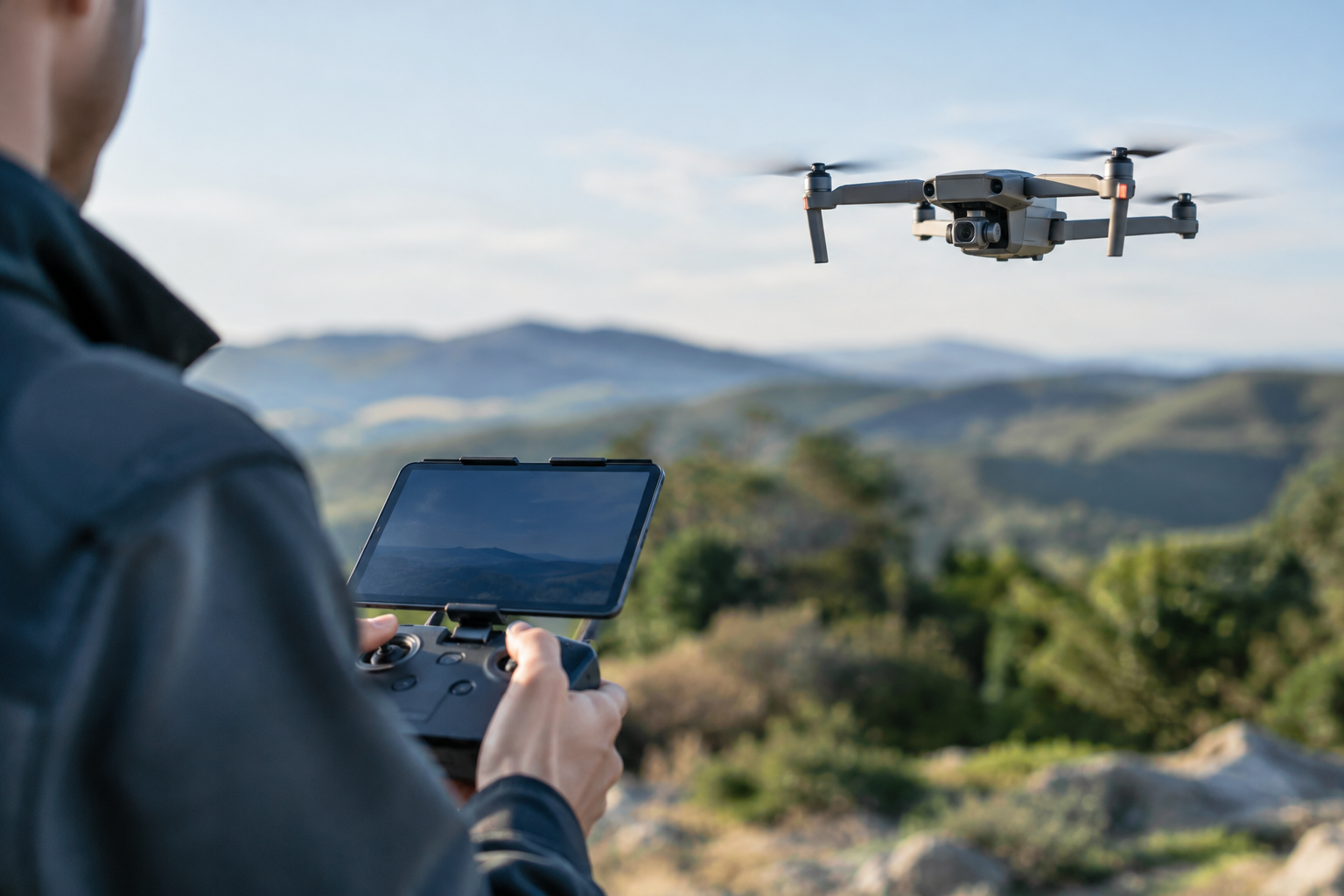
North Carolina HOA Drone and Surveillance Rules: What Your Board Can and Cannot Do
North Carolina has no state statute that specifically regulates drone use by homeowner associations or condo boards. The state also lacks a comprehensive HOA surveillance law that prescribes where cameras can be placed or how drone footage can be used. Your association's authority to adopt drone and surveillance policies flows from your governing documents, North Carolina common law on trespass and privacy, and federal aviation rules administered by the Federal Aviation Administration.
This absence of specific legislation creates both flexibility and risk. Your board can establish drone and camera rules through amendments to your covenants or through board resolutions, but you must respect property boundaries, member privacy expectations, and federal airspace restrictions. The North Carolina Attorney General's Consumer Protection Division handles complaints about HOA management practices, including invasive surveillance, when members allege unfair or deceptive conduct.
What North Carolina Common Law Says About Privacy
North Carolina courts recognize a common law right to privacy that includes protection from intrusion upon seclusion. This tort applies when someone intentionally intrudes, physically or otherwise, upon the solitude or seclusion of another in a way that would be highly offensive to a reasonable person. A drone hovering outside a member's bedroom window or a camera pointed into a backyard hot tub could trigger an intrusion claim if the homeowner had a reasonable expectation of privacy in that space.
The key question is whether the homeowner had a reasonable expectation of privacy at the time of the alleged intrusion. North Carolina courts apply a two part test: the person must have exhibited an actual subjective expectation of privacy, and society must recognize that expectation as reasonable. A member who installs privacy fencing, draws curtains, or uses a backyard area shielded from public view has a stronger claim than someone who leaves windows open to the street.
Your board cannot use a drone to capture images of the interior of a home through windows, even if the drone remains in airspace above common property. You also cannot install cameras that record private patios, balconies, or other areas where members have a reasonable expectation of privacy. Focus surveillance on common areas, entry points, parking lots, and perimeter fencing where privacy expectations are lower.
Federal Aviation Administration Rules for HOA Drones
If your board wants to use a drone to inspect roofs, survey landscaping, or document violations, you must comply with Federal Aviation Administration Part 107 rules. These rules require that the drone operator hold a Remote Pilot Certificate, fly only during daylight or civil twilight with appropriate anti collision lighting, keep the drone within visual line of sight, and avoid flying over people who are not directly participating in the operation.
Your association must also respect the FAA prohibition on flying over moving vehicles and must not operate the drone from a moving vehicle unless you are in a sparsely populated area. The drone cannot exceed an altitude of 400 feet above ground level in uncontrolled airspace. If your community is near Raleigh Durham International Airport, Charlotte Douglas International Airport, or another controlled airspace zone, you need prior authorization from air traffic control through the FAA's Low Altitude Authorization and Notification Capability system.
Many North Carolina associations hire licensed drone operators rather than training board members or managers to obtain the Remote Pilot Certificate. This approach reduces liability and ensures compliance with FAA rules. When you hire a third party operator, confirm that the pilot holds a current certificate and that the operator carries liability insurance that covers drone operations on behalf of HOAs.
What Your Governing Documents Allow
Your declaration of covenants and bylaws control whether your board has the authority to adopt surveillance policies in the first place. Review your documents to determine whether the board has explicit authority to install cameras on common property, regulate member use of drones, or enforce privacy rules. Many older North Carolina covenants do not mention drones or cameras because these technologies were uncommon when the documents were drafted.
If your documents are silent on surveillance, your board likely has implied authority to install cameras in common areas as part of its duty to maintain and protect association property. You can adopt a resolution that establishes camera locations, retention periods for footage, and access procedures. However, if your covenants prohibit the board from adopting rules that infringe on individual property rights, you may need membership approval before installing cameras that capture driveways or front entries.
Some North Carolina associations have amended their covenants to include explicit drone rules. For example, the Brier Creek Country Club Homeowners Association in Raleigh adopted a 2019 amendment that prohibits members from launching drones from common property without board approval and bans drone flights below 200 feet over other members' lots. The amendment also allows the board to use drones for property inspections and covenant enforcement, provided the drone operator holds an FAA certificate and does not capture images of home interiors.
North Carolina Trespass Law and Airspace
North Carolina trespass law, codified in Chapter 14, Article 22 of the North Carolina General Statutes, makes it a misdemeanor to enter or remain on another person's property without permission. Courts have extended trespass doctrine to airspace, holding that a property owner has exclusive use of the airspace above their land up to the altitude at which aircraft typically operate. A drone that flies low over a member's lot without permission could constitute trespass, even if the drone does not physically contact the property.
The boundary between permissible overflight and trespass is not clearly defined in North Carolina case law. Federal courts applying common law trespass principles have suggested that flights below 200 feet may intrude on a property owner's exclusive use of airspace, while flights above 400 feet are likely permissible. Your board should avoid flying a drone below 200 feet over individual lots unless you have written permission from the homeowner or your covenants grant the board explicit access rights for inspection purposes.
If a member launches a drone from their own lot and the flight remains above 200 feet, your board generally cannot prohibit the flight based on trespass or privacy grounds. However, you can regulate takeoff and landing locations through a board resolution or covenant amendment. Many associations restrict drone takeoffs to designated areas within common property to reduce noise, preserve privacy, and limit the risk of crashes near homes.
Surveillance Cameras on Common Property
Your board can install security cameras on common property without member approval if your governing documents grant the board authority to maintain and protect association assets. Focus camera placement on parking lots, clubhouses, pool areas, entry gates, and perimeter fencing. Post visible signs that inform members and guests that video surveillance is in use. North Carolina does not require signs by statute, but posting them reduces the risk of privacy claims and enhances the deterrent effect of the cameras.
Establish a written policy that covers how long footage is retained, who has access to the recordings, and under what circumstances footage will be shared with law enforcement or used in covenant enforcement actions. A retention period of 30 to 90 days is common and balances the need to preserve evidence with the cost of storage. Limit access to the board, the property manager, and security personnel. Require a written request and board approval before releasing footage to a member or third party.
Avoid placing cameras where they capture the interior of homes or private outdoor spaces. A camera mounted on a clubhouse that incidentally records a small portion of a nearby driveway is generally acceptable, but a camera aimed directly at a member's patio or pool would violate the reasonable expectation of privacy standard. If a member complains that a camera invades their privacy, review the camera angle and consider adjusting the field of view or relocating the camera.
A Charlotte Area Example
The Providence Plantation Homeowners Association in Charlotte installed 12 security cameras at community entry points and the clubhouse parking lot in 2020. The board adopted a resolution that specified camera locations, stated that footage would be retained for 60 days, and required board approval before footage could be released to anyone other than law enforcement responding to a crime. One member objected, claiming that a camera near the pool captured a portion of their backyard.
The board hired a consultant to review the camera angles and determined that the camera recorded only the pool deck and parking lot. The member's backyard was visible in the frame but only as background, and the resolution limited the camera's primary purpose to monitoring the pool area. The board declined to relocate the camera but agreed to adjust the angle slightly to reduce the amount of the member's property in the frame. The member did not pursue legal action, and the association continues to operate the cameras under the 2020 resolution.
This example illustrates the importance of documenting your surveillance policy in writing and responding promptly to member concerns. When you establish clear rules and demonstrate that your cameras serve a legitimate security purpose, you reduce the risk of privacy disputes and protect the board from claims of arbitrary or invasive conduct.
What to Do If a Member Operates a Drone
If a member operates a drone within the community, your board's authority to regulate the activity depends on where the drone takes off and lands and what your covenants say about nuisances and use restrictions. You cannot prohibit a member from flying a drone in federal airspace above the community, but you can regulate takeoff and landing locations on common property. You can also enforce noise restrictions and prohibit flights that create a nuisance or safety hazard.
Adopt a resolution that requires members who want to launch drones from common property to submit a written request to the board at least 14 days in advance. The request should describe the purpose of the flight, the date and time, the flight path, and proof that the operator holds an FAA Remote Pilot Certificate if the flight is for commercial purposes. The board can deny the request if the proposed flight would violate federal rules, intrude on other members' privacy, or create a safety risk.
If a member launches a drone from their own lot, your enforcement options are more limited. You can issue a violation notice if the drone flight violates a noise restriction, creates a nuisance, or if the member uses the drone to harass neighbors or capture images of private spaces. Document the complaint, gather witness statements, and consult your attorney before taking enforcement action. North Carolina courts give boards discretion to interpret and enforce covenants, but the board must act consistently and in good faith.
Enforcement and Legal Considerations
When your board enforces a drone or surveillance policy, follow the notice and hearing procedures in your governing documents. Send a written violation notice that describes the specific conduct that violates the policy, cites the applicable covenant or resolution, and gives the member an opportunity to cure the violation or request a hearing. If the member disputes the violation, hold a hearing and allow the member to present evidence.
If the violation continues after the hearing, the board can impose fines, suspend access to common amenities, or file a lawsuit seeking injunctive relief. North Carolina courts have authority to issue injunctions that prohibit a member from continuing conduct that violates the covenants or creates a nuisance. The prevailing party in a covenant enforcement action may recover attorney fees if the governing documents include a fee shifting provision.
Consult your attorney for your specific situation before adopting a new surveillance policy, taking enforcement action against a member's drone use, or responding to a privacy complaint. North Carolina law on HOA surveillance is evolving, and courts may apply privacy and trespass doctrines in ways that were not anticipated when your covenants were drafted. An attorney can review your governing documents, assess the risks of your proposed policy, and draft resolutions that comply with state and federal law.
How Manorway Supports Your Compliance Efforts
Manorway helps your board document surveillance policies, track member requests for drone use, and maintain records of enforcement actions. When you use an AI assisted platform to store your governing documents, resolutions, and member communications, you create an audit trail that protects the board in disputes. You can upload camera installation contracts, FAA certificates, and member consent forms in one place and retrieve them when needed.
The platform also helps you schedule policy reviews and remind the board to update surveillance rules when technology changes or new case law emerges. When your board stays informed and documents its decisions clearly, you reduce the risk of privacy claims and demonstrate that your policies serve the community's legitimate interests.
Action Steps for Your Board
Review your declaration and bylaws to determine whether your board has authority to install cameras and regulate drone use. If your documents are silent, consider whether implied authority is sufficient or whether you need membership approval for a covenant amendment. Draft a resolution that establishes camera locations, footage retention periods, and access procedures. Post signs that inform members and guests that surveillance is in use.
If your board plans to use a drone for inspections or covenant enforcement, confirm that the operator holds an FAA Remote Pilot Certificate and that your insurance policy covers drone operations. Establish a written policy that requires board approval before any drone flight and prohibits flights below 200 feet over individual lots without homeowner consent. Respond promptly to member complaints about camera angles or drone noise, and document your investigation and resolution.
Schedule an annual review of your surveillance policy to ensure it reflects current technology, member expectations, and legal standards. When you combine clear policies, transparent communication, and consistent enforcement, you protect member privacy while maintaining the security and order that your community expects.
Ready to modernize your HOA management?
Learn how Manorway can help your community operate more efficiently.
Get Started Today