South Dakota HOA Foreclosure Law: When and How Associations Can Foreclose
South Dakota has no state statute governing HOA foreclosure on unpaid dues. Your association's authority flows entirely from your declaration and bylaws, and foreclosure disputes are resolved under general contract and real property law.
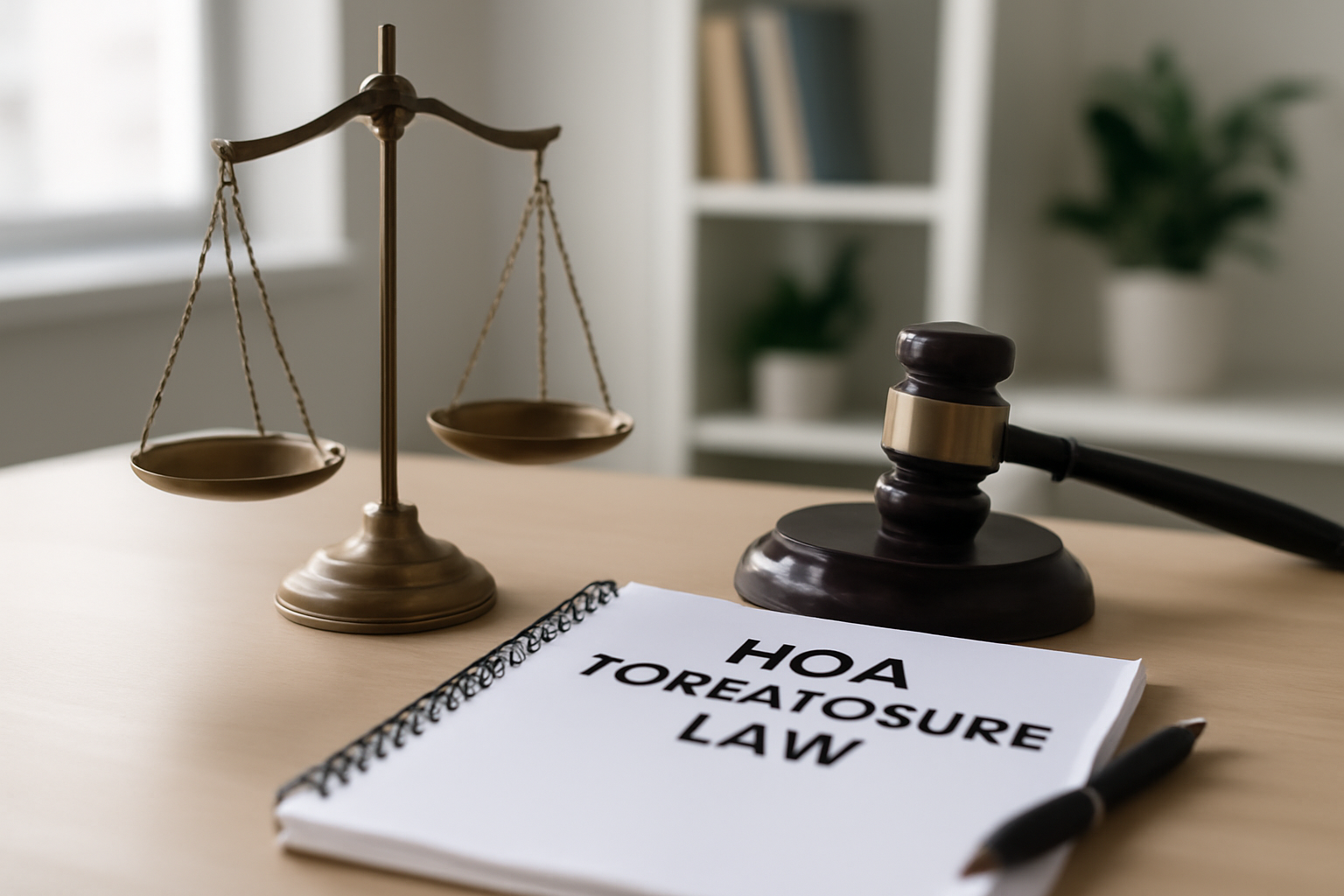
South Dakota HOA Foreclosure Law: When and How Associations Can Foreclose
South Dakota has no state statute that establishes when or how a homeowner association can foreclose on unpaid dues. Your association's authority to place a lien on a property and pursue foreclosure flows entirely from your declaration of covenants and bylaws, not from a dedicated HOA foreclosure law. This means that foreclosure procedures, lien priority, and notice requirements depend on what your governing documents say and how South Dakota courts interpret general real property and contract principles.
Because the state legislature has not enacted a comprehensive HOA statute comparable to the Uniform Common Interest Ownership Act adopted in many other states, South Dakota associations operate in a regulatory gap. The South Dakota Attorney General's office does not maintain a dedicated HOA oversight division, and the South Dakota Real Estate Commission focuses on licensed brokers and agents rather than association governance. When foreclosure disputes arise, they are litigated in state circuit court under the same rules that govern mortgage foreclosures and contract enforcement.
How Lien Priority Works in South Dakota
Your association's lien priority depends on the language in your recorded declaration. Most South Dakota HOA declarations state that the association's lien for unpaid assessments attaches when the assessment becomes due and that the lien is subordinate to first mortgages recorded before the assessment lien. This subordinate status means that if a mortgage holder forecloses, the association's lien is typically extinguished, and you may recover only partial or zero payment from the foreclosure sale proceeds.
Some declarations grant the association a super priority lien for a limited amount of unpaid assessments, similar to provisions in states that have adopted statutory super priority rules. However, South Dakota courts have not issued published opinions clarifying whether such provisions are enforceable against first mortgages. The absence of case law creates uncertainty, and boards should not assume that a declaration clause alone will override a recorded first mortgage.
A numerical example illustrates the risk. If a homeowner owes your association $8,000 in unpaid dues and the property has a $200,000 first mortgage, and the mortgage holder forecloses and the property sells for $190,000, the mortgage holder takes the full $190,000, and your association receives nothing. You would need to pursue a deficiency judgment against the former owner for the $8,000, which may be uncollectible if the owner is insolvent.
Judicial Foreclosure Requirement
South Dakota is a judicial foreclosure state for mortgages, and the same requirement applies to HOA lien foreclosures. You cannot use a trustee sale or nonjudicial process. Your association must file a lawsuit in circuit court, obtain a judgment, and request a court ordered sale of the property. The process typically takes six to twelve months from the date you file the complaint to the date of the sheriff's sale.
Your complaint must identify the property, cite the declaration provision that grants the association a lien, specify the amount owed, and request foreclosure and sale. The court will issue a summons, and you must serve the homeowner and any other lienholders of record. If the homeowner does not respond or does not successfully defend, the court will enter a default judgment and order the property sold at a public auction conducted by the county sheriff.
Notice and Demand Requirements
Your declaration and bylaws control what notice you must give before filing a foreclosure action. Most South Dakota HOA governing documents require that you send a written demand for payment at least 30 days before filing suit. Some documents require that you send notice by certified mail and that you inform the homeowner of the right to request a payment plan or hearing before the board.
If your documents are silent on notice, you should still provide at least one written demand. South Dakota courts apply general principles of fair dealing and reasonableness, and a court may view a foreclosure action as premature if you filed suit without giving the homeowner a reasonable opportunity to cure the default. A demand letter that states the amount owed, the date by which payment must be made, and the consequence of nonpayment creates a record that protects your association if the homeowner later claims surprise.
Common Mistakes South Dakota Boards Make
The most frequent mistake is failing to review the declaration before initiating foreclosure. Many boards assume that state law grants them automatic lien rights or a standard foreclosure procedure. When you file suit without confirming that your declaration authorizes a lien and without following the notice requirements in your bylaws, you risk dismissal and wasted legal fees.
Another common error is waiting too long to act. If you allow unpaid assessments to accumulate over several years, the amount owed may exceed the equity in the property, and foreclosure becomes impractical. A homeowner who owes $15,000 on a property worth $180,000 with a $175,000 mortgage has only $5,000 in equity. After you pay foreclosure costs and attorney fees, you may recover little or nothing.
A third mistake is neglecting to record the lien. In South Dakota, you must record a notice of lien or claim of lien with the Register of Deeds in the county where the property is located. If you do not record the lien, you cannot establish priority over subsequent creditors, and you lose the ability to pursue foreclosure. Recording also provides public notice to potential buyers and lenders that the property has an outstanding assessment obligation.
A Real Example from Rapid City
The Black Hills region, including Rapid City, has seen steady residential development over the past decade, with new subdivisions creating homeowner associations to manage common areas and enforce covenants. One Rapid City HOA encountered foreclosure complications in 2022 when a homeowner stopped paying dues after a property boundary dispute. The association sent multiple demand letters over 18 months, but the homeowner did not respond. The board voted to file a foreclosure action in Pennington County Circuit Court.
During discovery, the homeowner's attorney argued that the association's declaration did not grant a lien for legal fees and that the board had failed to follow the bylaws' requirement to offer a payment plan before filing suit. The court ruled that the association's lien covered only unpaid assessments and interest, not attorney fees, and ordered the parties to mediate. The case settled with a payment plan, but the association spent $12,000 in legal fees and collected only $6,500 in past due assessments. The board later amended the declaration to clarify lien scope and attorney fee recovery.
Alternatives to Foreclosure
Foreclosure is expensive, time consuming, and uncertain. Before you file suit, consider alternatives. A payment plan that spreads the debt over 12 or 24 months may allow the homeowner to cure the default without litigation. A voluntary lien release in exchange for partial payment may be appropriate if the homeowner is selling the property and the sale will not generate enough proceeds to cover the full debt.
Small claims court is another option for debts under $12,000. South Dakota magistrate courts have jurisdiction over claims up to that amount, and the process is faster and less formal than a circuit court foreclosure action. If you obtain a judgment in magistrate court, you can use wage garnishment or bank account levy to collect, which may be more effective than forcing a sale of the property.
Some associations hire collection agencies or attorneys who specialize in HOA debt recovery. These professionals can pursue payment without the board members spending time on demand letters and court filings. However, you must ensure that any collection activity complies with the federal Fair Debt Collection Practices Act, which prohibits abusive, deceptive, or unfair collection practices.
What You Should Do Now
Pull your declaration and bylaws and locate the provisions that address assessments, liens, and foreclosure. Confirm that your declaration grants the association a lien and specifies when the lien attaches. Check whether your bylaws require specific notice or a board hearing before you can file a foreclosure action. If your documents are silent or unclear, consult your attorney for your specific situation to determine whether an amendment is needed.
Create a written collections policy that outlines the steps your board will take when a homeowner falls behind on assessments. A typical policy includes a 30 day courtesy notice, a 60 day demand letter, a 90 day final notice, and a board vote to authorize legal action if the debt remains unpaid after 120 days. Document each step in your meeting minutes and in your correspondence with the homeowner.
Record a notice of lien with the Register of Deeds as soon as assessments become delinquent. South Dakota does not require a specific lien form, but your notice should include the legal description of the property, the amount owed, the period covered, and a citation to the declaration provision that authorizes the lien. Recording establishes your priority date and creates a public record that may motivate the homeowner to pay.
Manorway's AI assisted platform helps you track overdue assessments, generate demand letters, and maintain a timeline of collection actions. When your board uses a system that documents every notice and board decision, you create the audit trail that courts and attorneys need to evaluate your foreclosure case. Manorway does not replace legal counsel, but it organizes the information your attorney will request and reduces the time your board spends on paperwork.
Ready to modernize your HOA management?
Learn how Manorway can help your community operate more efficiently.
Get Started Today