South Carolina HOA Flag Display Rules: What Boards Must Allow
South Carolina law does not establish specific HOA flag display requirements, but federal law protects your right to fly the American flag. Learn what your board can restrict and what it must allow under the Freedom to Display the American Flag Act of 2005.
South Carolina HOA Flag Display Rules: What Boards Must Allow
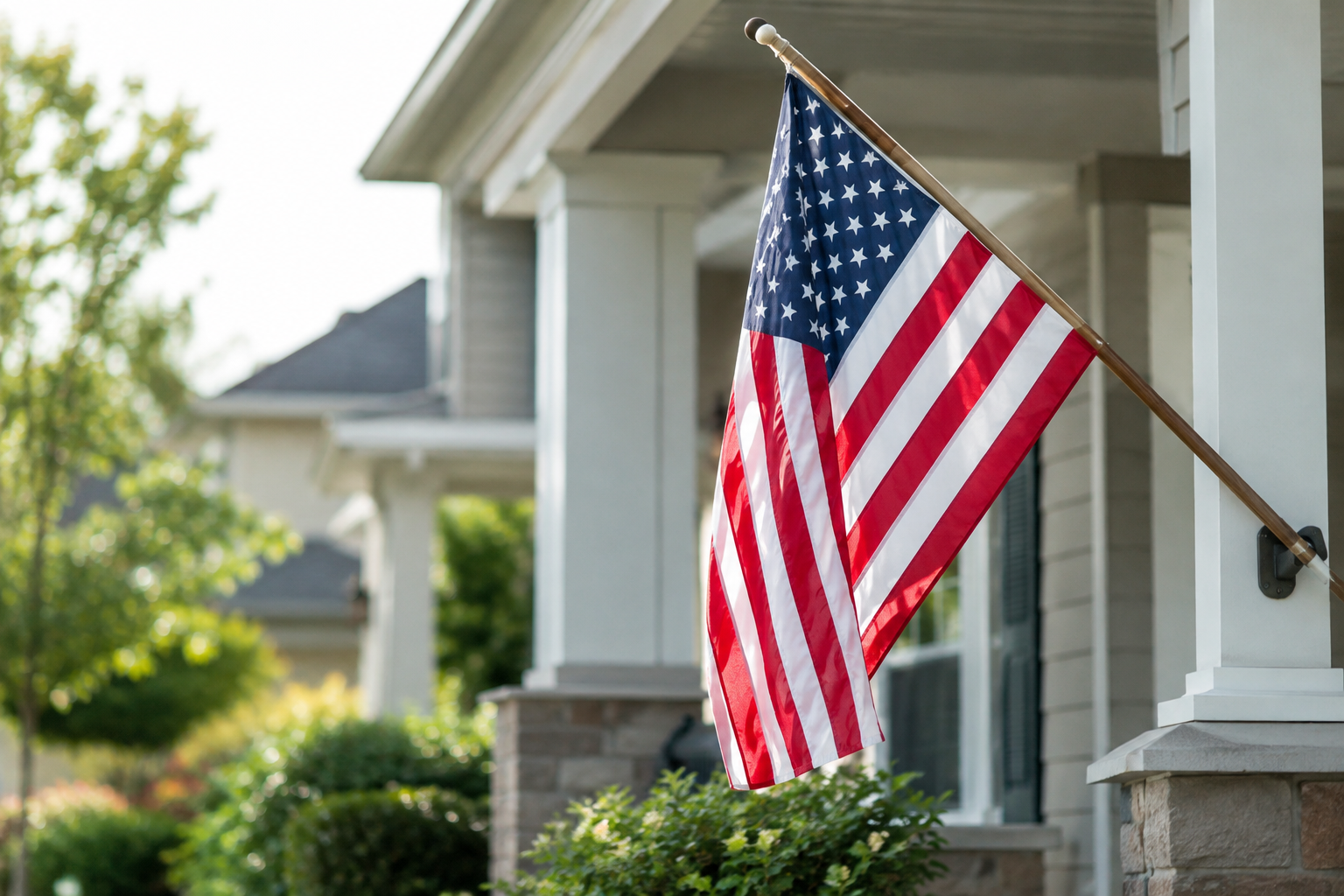
South Carolina has no state statute that mandates flag display rights for homeowners in associations. Your board's authority to regulate flags flows entirely from your governing documents, subject to federal law protections. The Freedom to Display the American Flag Act of 2005, codified at 4 U.S.C. § 5 note, overrides any covenant or bylaw that would ban the American flag outright, but it does not prohibit reasonable restrictions on size, placement, and number of flags.
Because South Carolina lacks a state law parallel to the federal act, your association operates under a simpler framework than states like Texas or Florida. You review your declaration and bylaws, confirm they do not ban the American flag, and decide whether to adopt reasonable restrictions. If your documents are silent, you have discretion to establish rules through board resolution or amendment.
What Federal Law Protects
The Freedom to Display the American Flag Act of 2005 prohibits your association from adopting or enforcing any policy that would prevent a member from displaying the flag of the United States on property the member owns or has exclusive use of. The act does not define a specific size or placement zone, but courts have consistently upheld reasonable restrictions that serve a legitimate aesthetic or safety purpose.
Your board can regulate the size of the flag, the type of flagpole, the location on the lot, and the condition of the flag. You can require that flags be in good repair, that poles not exceed a certain height, and that flags not be placed in common areas or easements. You cannot ban the flag entirely, and you cannot require a member to seek approval before displaying it.
A homeowner in South Carolina who wants to fly a three by five foot American flag on a six foot pole mounted to the front of the home is protected by federal law. Your board cannot prohibit that display. However, if the homeowner wants to install a 20 foot flagpole in the front yard, your governing documents may impose a height limit that applies to all structures, including flagpoles. The restriction must be content neutral and serve a legitimate purpose.
What Your Governing Documents Say
Your declaration and bylaws may already address flag display. Review the sections on architectural control, exterior modifications, and use restrictions. Many South Carolina associations adopted covenants in the 1980s and 1990s that contain blanket prohibitions on flagpoles or flags. Those provisions are unenforceable to the extent they ban the American flag, but they remain valid for other flags.
If your documents prohibit all flags without exception, your board should adopt a resolution clarifying that the American flag is permitted under federal law and specifying the reasonable restrictions that apply. The resolution creates a record that protects the board from liability and gives members clear guidance.
If your documents are silent, you have flexibility to adopt flag display guidelines through a board resolution. You do not need to amend the declaration unless you want to codify restrictions that go beyond what a resolution can accomplish. A resolution is faster, less expensive, and easier to modify if circumstances change.
State Flags, Military Flags, and Other Symbols
Federal law does not protect the South Carolina state flag, military service flags, or other symbols. Your board has authority to permit or prohibit these flags through your governing documents or a board policy. Many associations choose to allow the state flag and POW/MIA flag alongside the American flag, but that permission is a matter of board discretion, not legal mandate.
The Freedom to Display the American Flag Act of 2005 does not extend to flags of other nations, political flags, sports team flags, or decorative banners. Your board can adopt a policy that permits only the American flag, the South Carolina flag, and military service flags, and prohibits all others. That policy is enforceable as long as it is applied consistently and does not discriminate based on viewpoint.
A homeowner who displays a Confederate flag, a political campaign flag, or a decorative seasonal flag is not protected by federal law. Your board can adopt a resolution prohibiting those displays if your governing documents grant you authority over exterior decorations. You must apply the rule uniformly and document your enforcement actions.
Recent Disputes and Enforcement Lessons
South Carolina associations have faced disputes over flag size and placement even when the homeowner was displaying the American flag. In 2019, the board of the Lakewood Plantation Homeowners Association in Myrtle Beach sent a violation notice to a homeowner who installed a 25 foot flagpole in the front yard without architectural approval. The homeowner argued that federal law protected the display. The board responded that the height restriction applied to all structures and was content neutral. The parties settled after the homeowner agreed to reduce the pole height to 15 feet, which matched the maximum height for other yard structures.
The lesson from that dispute is that your board must ground any restriction in a neutral rule that serves a legitimate purpose. A height limit that applies to flagpoles, light poles, and arbors is defensible. A height limit that applies only to flagpoles is more vulnerable to challenge. Document the purpose of the restriction in your resolution or amendment, and apply it consistently.
Another common issue is flag condition. Homeowners sometimes display worn or torn flags, which other members find disrespectful. Your board can adopt a policy requiring that all flags be in good repair and replace any flag that becomes faded, torn, or frayed. That policy is content neutral and serves a legitimate aesthetic and symbolic purpose.
What the South Carolina Attorney General's Office Oversees
The South Carolina Attorney General's office does not have statutory authority over HOA flag disputes. The office handles consumer protection complaints and charitable organization oversight, but it does not enforce HOA covenants. If a member believes your board has violated federal law by banning the American flag, the member's remedy is a federal lawsuit under 4 U.S.C. § 5 note, not a complaint to a state agency.
However, the South Carolina Department of Consumer Affairs receives general complaints about HOA management practices. While the department cannot order your board to allow or prohibit a flag, a pattern of complaints about arbitrary enforcement can trigger an investigation into broader governance issues. Your best protection is consistent, documented enforcement of a clearly written policy.
Reasonable Restrictions You Can Adopt
Your board has authority to adopt the following types of restrictions, provided they are applied consistently and serve a legitimate purpose:
Size limits. You can specify a maximum flag size, such as three by five feet or four by six feet. The limit must be reasonable in relation to typical residential flag sizes.
Pole height limits. You can cap flagpole height at six feet, ten feet, or another measurement that aligns with other structure height limits in your community. A six foot limit for a flag mounted to the home and a ten foot limit for a freestanding pole are both defensible.
Location restrictions. You can require that flags be displayed on the front of the home, in a planter box, or within a specific zone of the lot. You cannot require that flags be hidden or placed out of view.
Number limits. You can limit each home to one or two flags at a time. A limit of one American flag and one state or military flag is reasonable.
Condition requirements. You can require that all flags be in good repair, clean, and free of tears or fading. You can require members to replace worn flags within a specific timeframe after notice.
Lighting and illumination. You can prohibit spotlights or floodlights that illuminate flags if those lights create a nuisance for neighboring homes. You can require that any flag displayed at night be illuminated in accordance with the U.S. Flag Code, which recommends lighting but does not mandate it for private citizens.
What You Should Do Now
Pull your declaration, bylaws, and any architectural guidelines. Search for provisions that mention flags, flagpoles, exterior decorations, or yard structures. If you find a blanket prohibition on flags, draft a board resolution clarifying that the American flag is permitted under federal law and listing the reasonable restrictions that apply. Circulate the resolution to your membership with a brief explanation of the federal law basis.
If your documents are silent, decide whether you want to adopt flag display guidelines. Consider the character of your community, the desires of your membership, and the enforcement capacity of your board. A community with strong military ties may choose to permit the American flag, state flag, and military service flags without size limits. A community with strict architectural standards may choose to permit only one three by five foot flag on a six foot pole mounted to the home.
Document your decision in a board resolution. Include the effective date, the types of flags permitted, the size and location restrictions, and the procedure for reporting violations. Send the resolution to all members and post it on your community website or portal. Update your architectural guidelines to reference the flag policy. Consult your attorney for your specific situation to confirm that your restrictions are enforceable and comply with federal law.
How Manorway Helps You Manage Flag Policies
Manorway's AI assisted platform stores your governing documents, board resolutions, and architectural guidelines in one place. You can track flag display requests, record enforcement actions, and maintain a complete audit trail of policy changes. When a member submits a question about flag size or placement, your board can pull up the current policy and respond with a consistent answer.
The platform also helps you communicate policy updates to members. When your board adopts a new flag display resolution, you can send a notice to all members through the platform and attach the resolution text. Members receive the update immediately, and you create a record of the communication that protects the board in future disputes.
By using an AI assisted platform to manage your flag policy and other covenant enforcement matters, you reduce the risk of inconsistent enforcement and improve transparency. Your members know what the rules are, your board documents its decisions, and your association avoids disputes that waste time and money.
Ready to modernize your HOA management?
Learn how Manorway can help your community operate more efficiently.
Get Started Today