Utah HOA Drone Rules and Surveillance Camera Authority
Utah law does not regulate HOA drone flights or surveillance camera placement. Your association's authority flows from your covenants and bylaws, balanced against common law privacy expectations and trespass doctrine.
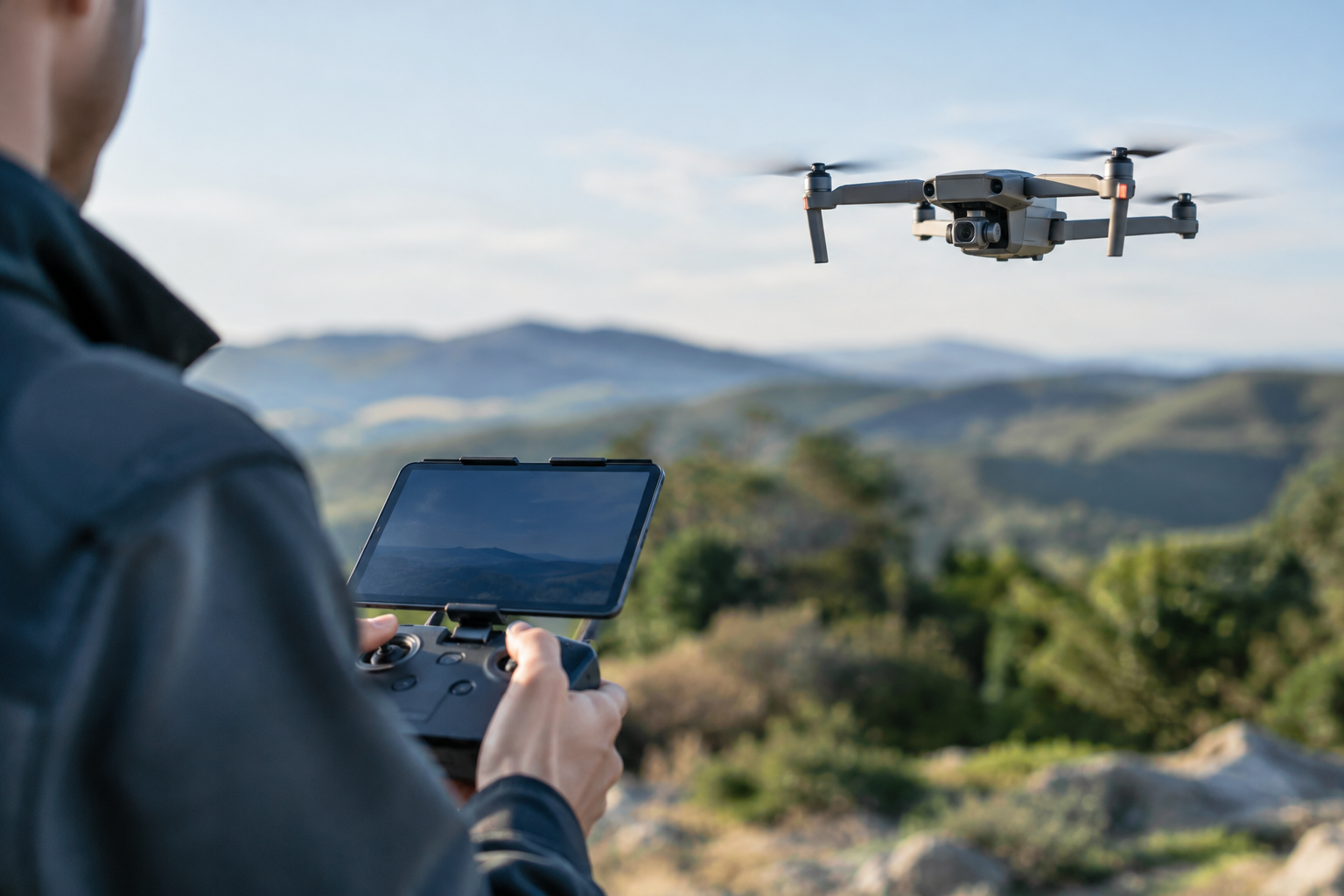
Utah HOA Drone Rules and Surveillance Camera Authority
Utah has no state statute that restricts or regulates HOA drone use or the installation of surveillance cameras on common property. Your association's authority to adopt drone policies, install cameras, or restrict member use of aerial devices comes entirely from your governing documents. This absence of explicit statute creates flexibility for boards to craft rules, but it also creates risk when members challenge camera placement or drone restrictions as invasions of privacy.
What Utah Common Law and Federal Rules Establish
Because Utah has not enacted HOA specific privacy or surveillance legislation, your board operates under common law principles of trespass, nuisance, and reasonable expectation of privacy. Utah courts recognize that property owners have a right to peaceful enjoyment of their homes, and that intrusive surveillance or persistent drone flights can constitute a nuisance if they interfere with that enjoyment.
Federal Aviation Administration rules govern all recreational and commercial drone flights in Utah. The FAA requires that recreational drones remain below 400 feet, stay within visual line of sight, and avoid restricted airspace. These federal rules do not give your HOA direct enforcement power, but they establish a baseline that your association can reference when drafting drone policies. If a member violates FAA altitude or airspace rules, your board can cite federal noncompliance as grounds for a covenant violation.
Utah Code Section 76-9-402 makes criminal voyeurism a Class A misdemeanor when someone intentionally photographs or records another person in a private place without consent. While this statute applies to individuals rather than associations, it sets a legal floor for privacy expectations that your board should respect when installing cameras or reviewing member complaints about drones.
State Agency Oversight
The Utah Department of Commerce Division of Real Estate oversees HOA registration and handles consumer complaints about association governance. The division does not issue guidance on drone or surveillance policy, but it investigates claims that boards violated governing documents or breached fiduciary duties. If your board installs cameras without authority or adopts drone rules that exceed your covenants, a member can file a complaint with the division alleging mismanagement.
The Utah Attorney General's office prosecutes criminal voyeurism cases but does not regulate HOA camera placement. Your board should consult local law enforcement if you receive a complaint that a member's drone or camera violates criminal privacy law.
What Your Governing Documents Control
Your declaration of covenants and bylaws determine whether your board can adopt drone restrictions, install surveillance cameras on common areas, or prohibit members from mounting cameras on their units. Most Utah HOA covenants grant the board authority to adopt rules for the peace, safety, and welfare of the community. Courts interpret this language to allow reasonable drone and camera policies when the board can show a legitimate interest in security, noise reduction, or privacy protection.
If your covenants allow you to regulate activities that create nuisance or disturb neighbors, you can adopt a drone policy that limits flight times, restricts flights over private patios or yards, and requires members to obtain board approval before operating drones within the community. Your policy should define prohibited conduct clearly. For example, you might ban drone flights between 8 PM and 8 AM, prohibit hovering over another unit's outdoor space for more than 30 seconds, and require that all flights comply with FAA altitude limits.
If your covenants authorize you to maintain common area security, you can install cameras at entry gates, parking lots, and clubhouse exteriors. Your policy should specify where cameras are located, how long footage is retained, who has access to recordings, and the process for members to request footage review. Avoid pointing cameras directly at unit windows or private patios unless you have explicit covenant authority and a documented security need.
A Real Utah Dispute
In 2019, the Canyon Ridge Homeowners Association in Draper adopted a rule banning all recreational drone flights within the community after multiple residents complained about a member who flew a camera equipped drone over backyard pools and patios. The member challenged the rule, arguing that the covenants did not grant the board authority to regulate airspace. The association's covenants included a broad nuisance provision that prohibited activities causing unreasonable disturbance to neighbors. The board presented testimony from four homeowners who reported that the drone noise and camera presence made them uncomfortable using their outdoor spaces. The parties settled before trial, with the member agreeing to cease flights over private yards and the board revising the rule to allow flights over common open space during daylight hours. The dispute cost the association over 12,000 dollars in legal fees.
This case illustrates two practical lessons. First, even a well intentioned rule can trigger litigation if the board cannot tie the restriction directly to covenant language. Second, specificity reduces conflict. A rule that says "no drones" invites more challenges than a rule that says "no drone flights over private yards, no flights after dark, all flights must comply with FAA rules."
Privacy and Reasonableness Balancing
Utah courts apply a reasonableness test when evaluating whether an HOA rule violates member rights. A drone or camera policy is more likely to survive a legal challenge if it serves a legitimate community interest, applies equally to all members, and uses the least intrusive means to achieve the goal. If your board wants to restrict drones, document the complaints you have received, the specific harm those complaints describe, and the narrowest rule that addresses the harm.
If you plan to install surveillance cameras, limit camera angles to common areas where members have a reduced expectation of privacy. A camera covering a parking lot is easier to defend than a camera that records a unit's front door or windows. Post clear signage at all camera locations so members and guests know they are being recorded. Adopt a data retention policy that limits how long footage is stored and restricts access to board officers or property managers.
Member Rights and Enforcement
Utah law does not give HOA boards the power to seize drones or confiscate cameras. If a member violates your drone policy, your enforcement options are the same as for any other covenant violation. Send a written notice describing the violation, provide the member an opportunity to respond, and schedule a hearing if the violation continues. If the member does not comply after the hearing, you can impose fines according to your governing documents or pursue an injunction in district court.
If a member's drone or camera activity rises to the level of criminal voyeurism or harassment, refer the matter to local law enforcement. Your board should not investigate criminal allegations or attempt to mediate disputes that involve potential criminal conduct.
What You Should Do Now
Review your covenants and bylaws to confirm whether your board has authority to adopt drone or surveillance policies. If your covenants include nuisance, peace and welfare, or security provisions, you likely have authority to regulate drones and install cameras within reasonable limits. If your covenants are silent, consider proposing an amendment that grants the board explicit authority to adopt technology and surveillance rules.
Draft a clear written policy that defines prohibited conduct, states the reason for the restriction, and explains the enforcement process. If you are installing cameras, map the camera locations, specify the retention period, and adopt an access control procedure. Circulate the draft policy to members for comment before final adoption. Consult your attorney for your specific situation to review the policy and confirm that it aligns with your governing documents.
Manorway's AI assisted platform helps you track policy adoption, store camera footage access logs, and document member complaints about drones or surveillance. When you use a governance platform to maintain records of enforcement actions and member communications, you create an audit trail that supports your board's decisions and reduces the risk of costly disputes.
Key Takeaways for Utah Boards
Utah HOA boards have no state statute to reference when drafting drone or camera policies, so your authority depends entirely on covenant language and common law reasonableness. Document the community need that justifies any restriction, apply rules uniformly, and limit surveillance to common areas where privacy expectations are low. Clear written policies and consistent enforcement protect your board from claims that you exceeded your authority or treated members unfairly.
Ready to modernize your HOA management?
Learn how Manorway can help your community operate more efficiently.
Get Started Today