Washington HOA Flag Display Rules: Federal Law Controls
Washington has no state law that governs HOA flag display restrictions. Federal law protects the United States flag, and your association's covenants control other flags. Here is what your board must know before enforcing a flag rule.
Washington HOA Flag Display Rules: Federal Law Controls
Washington has no state statute that mandates flag display rights in homeowner associations or condominiums. Your association's authority to permit or restrict flags flows from your declaration of covenants, bylaws, and the federal Freedom to Display the American Flag Act of 2005, codified at 4 USC 5 and 36 USC 10. Because Washington law does not override your governing documents on this point, your first step is to review your covenants and understand the narrow federal protection that does exist.
What Federal Law Protects
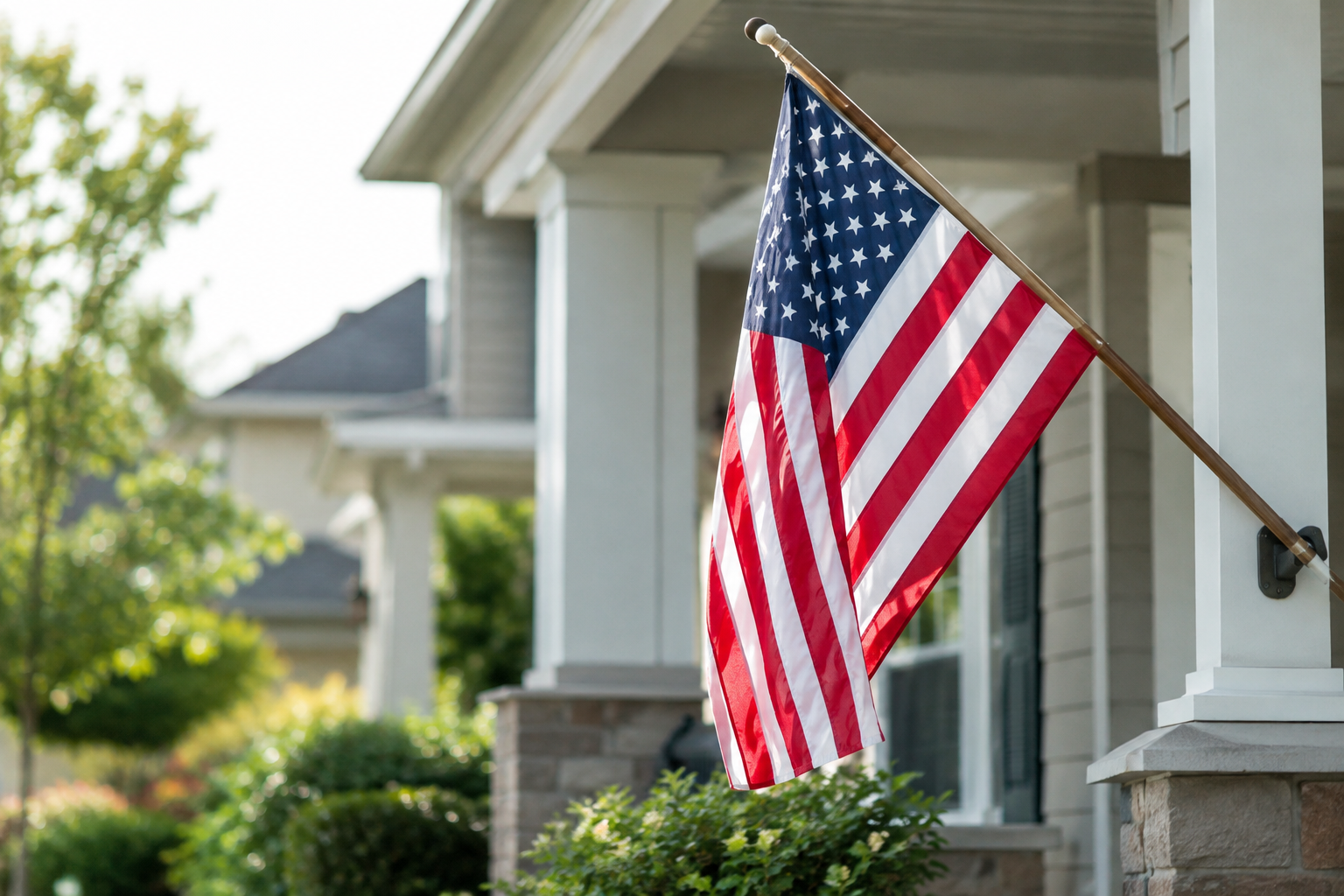
The Freedom to Display the American Flag Act, 4 USC 5, prohibits your association from adopting or enforcing any policy that would restrict an owner from displaying the flag of the United States on property the owner occupies. The statute does allow your board to impose reasonable time, place, or manner restrictions that are necessary to protect a substantial interest of the association. A reasonable restriction might specify flag size, the location of the flagpole, or the condition of the flag. A restriction that bans the United States flag entirely is not reasonable under federal law.
The federal statute does not protect state flags, military service flags, political flags, pride flags, or any other flag except the flag of the United States. Your association may prohibit or regulate those flags to any extent your governing documents allow, subject to Washington antidiscrimination law and contract principles.
What Washington Law Does Not Say
Washington has not enacted a state statute comparable to the flag display laws in Texas, Florida, or Arizona. Those states explicitly protect military service flags, prisoner of war flags, or state flags in addition to the United States flag. Washington courts apply the federal statute and interpret covenants under common law contract rules, but they have not extended flag display protection beyond the federal standard.
The Washington Uniform Common Interest Ownership Act, RCW 64.90, governs voting, meetings, budgets, and reserves. It does not address flag display. Communities created before July 1, 2018 and still governed by RCW 64.32, RCW 64.34, or RCW 64.38 likewise have no state flag statute. On January 1, 2028, ESSB 5796 will bring every Washington common interest community under RCW 64.90, but that transition does not create new flag display rights.
The Washington Human Rights Commission enforces RCW 49.60, which prohibits discrimination in housing on the basis of race, religion, national origin, and other protected classes. If your association enforces a flag rule in a manner that discriminates against a protected class, the commission has authority to investigate and remedy the violation. A neutral flag rule that applies to all owners equally does not violate RCW 49.60, but selective enforcement based on the message of the flag could create liability.
Reasonable Restrictions Under Federal Law
The federal statute allows your board to impose reasonable time, place, or manner restrictions. Courts have upheld rules that limit flag size to a specific dimension, require flagpoles to be located in the backyard or side yard rather than the front yard, or prohibit tattered or faded flags. A rule that restricts the hours of display, the number of flags, or the height of the flagpole may be reasonable if it serves a substantial association interest such as aesthetic uniformity or safety.
A rule is not reasonable if it effectively bans the flag. For example, a rule that limits flags to six inches by eight inches is not reasonable because a flag that small is not visible from the street. A rule that prohibits all flagpoles and permits flags only when attached flat to the exterior wall may be reasonable in a high density condominium but unreasonable in a single family subdivision where the declaration emphasizes individual expression.
Your board should document the substantial interest the restriction serves. Aesthetic consistency is a recognized interest, but it must be balanced against the owner's right to display the flag. Safety concerns, such as preventing flagpoles from obstructing sight lines at an intersection, are also substantial. A restriction that exists solely to prevent political expression or to enforce a personal preference of one board member will not survive a challenge.
Non United States Flags
Your association may prohibit state flags, military service flags, sports team flags, religious flags, and political flags if your covenants grant that authority. Many Washington associations adopt architectural guidelines that permit only the United States flag and prohibit all other banners. That rule is enforceable as long as it is applied uniformly.
A rule that permits some non United States flags but bans others on the basis of viewpoint may violate the First Amendment if the association is a state actor, or RCW 49.60 if the rule discriminates on the basis of a protected class. Most homeowner associations are not state actors, so the First Amendment does not apply, but selective enforcement can still create contract or discrimination claims. If your board permits a pride flag during June but prohibits a religious flag in December, an owner may argue that the rule is arbitrary or discriminatory.
Your safest approach is to adopt a bright line rule. Either permit only the United States flag, or permit all flags subject to size and condition restrictions. A board that attempts to curate which messages are acceptable invites litigation.
Washington Case Example
In 2018, the Homestead Homeowners Association in Vancouver attempted to enforce a no flag rule against an owner who displayed a United States flag on a pole in his front yard. The owner filed a complaint citing 4 USC 5, and the association's attorney advised the board that the rule was unenforceable under federal law. The board amended its guidelines to permit the United States flag on a pole no taller than 20 feet and in good condition. The owner complied, and the dispute resolved without litigation.
This example illustrates the cost of adopting a rule without checking federal law. The association incurred attorney fees, delayed enforcement of other covenants while the flag dispute consumed board attention, and created division among members. A review of the federal statute before drafting the rule would have avoided the conflict.
Drafting a Flag Display Rule
If your governing documents are silent on flags, your board may adopt a rule under the general rulemaking authority in your bylaws or declaration. The rule should state that owners may display the flag of the United States, specify reasonable restrictions on size, location, and condition, and prohibit all other flags unless the board votes to permit them. For example:
"An owner may display the flag of the United States on a flagpole located in the owner's front yard or side yard. The flagpole may not exceed 20 feet in height. The flag must be maintained in good condition and may not be tattered, faded, or soiled. The flag must comply with the United States Flag Code as a matter of courtesy, but noncompliance with the flag code does not constitute a violation of this rule. All other flags, banners, and pennants are prohibited unless the board adopts a separate resolution permitting a specific category of flag."
This language satisfies 4 USC 5 because it does not prohibit the United States flag and imposes only reasonable restrictions. It gives the board flexibility to permit military service flags or state flags in the future by resolution, without opening the door to all flags.
Enforcement and Penalties
If an owner violates your flag rule, your board may impose a fine or pursue an injunction under the enforcement provisions in your covenants. RCW 64.90.485 gives your association a lien for unpaid fines, but only if your governing documents authorize fines and the fine complies with notice and hearing requirements. Before you fine an owner for displaying a prohibited flag, confirm that your rule is enforceable and that you have followed the notice procedure in your covenants.
If the flag at issue is the United States flag, and your rule bans it entirely, you will lose. The owner will cite 4 USC 5, and the court will void your rule. If your rule imposes a reasonable restriction, and the owner's flag violates that restriction, you may prevail. Document the violation with photographs, send a notice letter citing the specific rule, and offer the owner an opportunity to cure before you assess a fine.
What to Do Next
Pull your association's declaration, bylaws, and architectural guidelines. Search for the word "flag" and review any existing rule. If your documents prohibit all flags, including the United States flag, that prohibition is void under 4 USC 5. Amend your rule to comply with federal law. If your documents are silent, consider whether your board wants to adopt a rule now or wait until a flag dispute arises.
If you adopt a rule, circulate a draft to owners at least 30 days before the board votes. Invite comment. Explain the federal requirement and the rationale for any size or location restriction. After you adopt the rule, publish it in a member communication and post it on your association website. Consistent communication reduces the chance that an owner will claim surprise when you enforce the rule.
Consult your attorney for your specific situation before you fine an owner or file a lawsuit over a flag. A misstep in enforcing a flag rule can cost thousands in attorney fees and create a precedent that limits your board's authority in future disputes.
How Manorway Helps
Manorway's AI assisted platform stores your governing documents, tracks rule adoption deadlines, and maintains a record of enforcement actions. When your board uses Manorway to manage architectural guidelines and violations, you create an audit trail that shows consistent enforcement and protects the board in disputes. The platform can generate notice letters, schedule hearings, and record board votes, so you spend less time on administrative tasks and more time on governance.
You can upload your current flag rule, set a reminder to review it annually, and link it to the federal statute in your document library. If an owner submits an architectural request to display a flag, Manorway helps you track the request, apply your rule uniformly, and document your decision. When flag disputes arise, you have a complete record of what the rule said, when it was adopted, and how you enforced it in past cases.
Ready to modernize your HOA management?
Learn how Manorway can help your community operate more efficiently.
Get Started Today